
Contents
Contents
Most B2B deals don’t happen at the moment a lead fills out a form or clicks an ad. The prospects spend months researching possible solutions, comparing competitors, and discussing in private circles. This phase of the buyer journey, the dark funnel, is invisible to marketing dashboards, making it difficult to tell when real demand is forming or fading.
The same logic applies to churn. The decision to cancel a subscription often happens weeks earlier, before the official notice, triggered by subtle drops in engagement or changes in key product behaviors. By the time traditional analytics detects the problem, the opportunity to re-engage the customer is gone.
The signals are already in your behavioral logs, engagement patterns, and product usage data. What is missing is the modeling layer to surface them. Predictive analytics solutions in marketing are one of the most effective ways to forecast the market’s next move and meet prospects while they are still defining their requirements.
Why Predictive Analytics is the New Marketing Standard
While there are many drivers behind the rise of AI predictive analytics in marketing, perhaps the most defining is the growing complexity of the B2B buyer journey, surrounded by unprecedented volumes of customer data.
Much longer, noisier journeys now involve five to 16 stakeholders and multiple rounds of internal validation, making it difficult to identify buying intent. Nearly 67% of CMOs admit they have more behavioral and interaction data than they ever had, but paradoxically, having more data hasn’t made the path to conversion any clearer. Most of this information is fragmented across different tools and channels, which show disconnected interactions and lack the full decision context. So, teams see more activity but not necessarily the intent behind it.
Predictive analytics connects the dots between the abundance of the collected customer information and historical conversion signals to help organizations predict future events. Using machine learning models to analyze customer interactions with marketing campaigns will let CMOs anticipate churn risk and allocate budget only to the segments with the highest predicted Customer Lifetime Value (CLV).
That kind of decision intelligence is becoming the norm faster than most teams expect. Gartner projects that by 2027, half of business decisions will be supported or delegated to AI agents, and marketing is among the first functions to feel that shift.
| Feature | Reactive Marketing | Predictive Marketing |
| Decision driver | Professional instinct and best guesses | Predictive analytics models tailored to digital marketing |
| Insight direction | Analyzes the past to explain outcomes | Forecast the future to shape strategies and decisions |
| Accountability | Campaign-level metrics | Finance-ready revenue forecast |
| Customer insight | Demographic segmentation | Behavioral patterns and intent signals |
| Lead prioritization | Volume-based | Scored by predicted conversion likelihood |
| Budget logic | Justifies past spending | Guides future budget allocation |
| Team alignment | Answers to marketing | Aligns marketing, sales, and finance |
| Testing & optimization | Slow A/B tests | High-velocity simulations |
Benefits of Predictive Analytics in Marketing: 4 Ways It Maximizes Your ROI
The margin for error for CMOs has evaporated as marketing is no longer judged by creative reach, but by its direct impact on EBITDA (Earnings Before Interest, Taxes, Depreciation, and Amortization). One of the most compelling benefits of predictive analytics in marketing is its ability to identify and capture the hidden pockets of high-probability revenue.
High-Accuracy Churn Prediction and Prevention
Retention is the most cost-effective way to scale a B2B business, yet most teams start to scramble for solutions once a cancellation is imminent. Using predictive analytics in marketing changes this by identifying tiny shifts in customer behavior, like a drop in usual session frequency or a decrease in certain feature usage.
Instead of broad re-engagement campaigns with low to no impact, marketing and customer success teams can target most-at-risk accounts with personalized offerings at the right time.
Optimizing Customer Lifetime Value
A successful data-driven marketing strategy has to give a clear view of which segments will yield the highest long-term returns versus those that are high-maintenance and low-margin. Predictive models take into account historical purchase frequency, average order value, and support interaction costs to forecast a customer’s total value over time.
This analysis tells your team which accounts to protect, which to develop, and which are unlikely to become profitable, no matter how much budget is allocated to acquisition or nurturing. Predictive modeling surfaces undervalued accounts within your existing base, providing the hard data needed to justify investment in customer marketing.
Smart Lead Scoring: Focus on What Converts
Traditional lead scoring assigns points based on static firmographics like job title, company size, and form fills. But the two decision-makers sharing the same C-level profile can behave in entirely different ways. Predictive modeling for sales helps remove this subjectivity. It learns from historical closed-won data to pinpoint the high-intent behavioral sequences that indicate the higher probability of conversion, and re-scores your lead database in real time as new signals are spotted.
One of the ways to fuel these models with high-quality data is to use AI chatbots for lead generation, which capture real-time intent and behavioral cues during conversation. They help keep your model fed with richer, first-hand behavioral data that improves prediction precision.
For marketing and sales that have different views on lead quality, a shared predictive score creates a common language. Teams can stop debating lead definitions and focus jointly on the accounts that the data proves are ready to buy.
Personalized Content and Product Recommendations
Generic nurture sequences lose their effectiveness as buyer expectations rise, but predictive AI analytics allows brands to catch up and deliver relevant experiences. Thanks to real-time analytics, it’s easier to anticipate which content or product feature will solve a user’s current pain point, and which channel will work best. For example, if a manufacturing prospect repeatedly visits your inventory management pricing page, the system can instantly swap a generic welcome email for a technical case study on warehouse ROI.
More personalized buyer experience and a shorter path from first touch to sales conversation are natural outcomes of a truly data-driven funnel.
Key Predictive Analytics Techniques for Effective Marketing
As evidenced by successful examples of predictive analytics in marketing, the ultimate return from predictive initiatives depends on the choice of the right analytical technique to match a specific commercial goal and extract only important behavioral trends for your business. Below, we outlined the most popular models and the marketing questions they help answer.
- Classification models are the workhorses of churn prediction and lead scoring. They sort prospects into “likely to buy” vs. “just browsing” categories, which accelerates time-to-close, and most importantly decreases overall customer acquisition cost (CAC) thanks to highly precise customer segmentation.
- Recommendation engines suggest relevant content that reflects users’ previous interactions and behavioral patterns. In account-based marketing, recommendation engines may highlight the most relevant industry case study or ROI benchmarks after the user has reviewed product documentation or visited pricing pages.
- Market basket analysis helps retailers increase sales by suggesting the next best product or content that logically complements the basket or fits naturally into the customer’s purchase flow during shopping. It positively impacts average order value (AOV) through cross-sell and increases LTV due to relevant content.
- Churn models are narrowly specific and track only those metrics that show signs of disengagement, such as reduced session frequency or neglected product updates, to let retention teams reconnect at the moment a user’s interest begins to fade.
- Multi-touch attribution evaluates campaign ROI and engagement rates across all digital and physical channels an organization uses to give a comprehensive view of how each contributes to a conversion.
Building Predictive Analytics into Your Digital Marketing Workflow
Technical details aside, the successful implementation of predictive analytics in marketing planning includes strategy and process engineering as well as a clear vision of desired business outcomes. These decisions separate a useful predictive system from an expensive experiment.
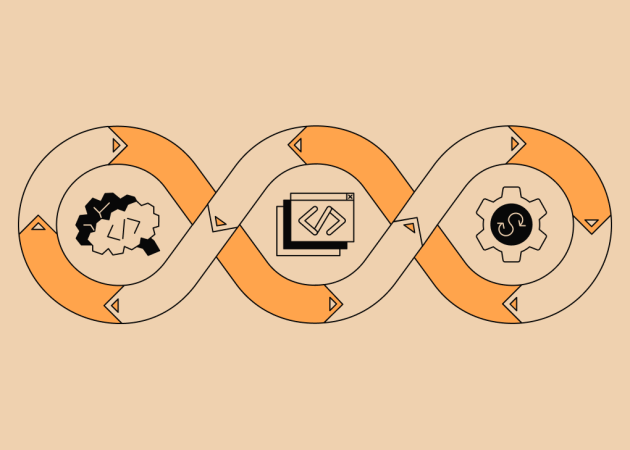
And to move from theory to execution, teams should follow the five steps in the predictive model lifecycle:
- Data collection consolidates behavioral, transactional, and campaign interaction data from your tech stack into a unified view.
- Feature engineering identifies which signals correlate with a sale or the other outcome you’re predicting.
- Model training teaches the algorithm to recognize patterns by referencing historical data.
- Deployment connects model outputs to your marketing automation workflows, so scores and predictions can trigger actions.
- Monitoring evaluates model relevance over time because customer data that the model was trained on last year or even half a year ago quickly loses predictive relevance.
It’s worth noting that monitoring is one of the underinvested stages. When left unmanaged, a model’s drift leads to decisions that are costlier or more destructive than the ones made by instinct. Therefore, high-performing teams lean into human-in-the-loop in AI workflows to validate the AI’s outputs and be sure they can trust the predictions.
Data Infrastructure Requirements for Using Predictive Analytics in Marketing
You can expect the predictions to be as sharp as the data flows feeding them. Yet in most organizations, customer data is scattered across a CRM, ad platform, email tool, and product analytics at a bare minimum. Each holds only a fragment of the picture, and if they aren’t integrated, no system can reconstruct how prospects move through the buying process. Running predictive analytics in marketing campaigns on top of siloed data won’t produce better decisions. It will produce confident wrong ones.
So, the key to making predictive analytics truly operational is a unified data layer that would bring together behavioral and campaign data to make data digestible and usable for AI. Given that signals arrive from dozens of sources simultaneously, data infrastructure development becomes paramount for breaking down data silos.
Well-designed data pipelines are what enable true data-driven decision-making that informs predictions and activates automations. What’s more, as teams begin comparing AI agents vs traditional automation tools, many discover that agents require a much more robust, low-latency environment to function effectively.
Best Practices for Sustainable Predictive Analytics in B2B Marketing
To gain C-suite trust, predictive analytics in B2B marketing must demonstrate consistent stability, which can be achieved through operational discipline. As CFOs increasingly scrutinize marketing’s revenue contribution, teams must develop and stick to a sustainable, revenue-centric methodology. The following four principles are the high-level starting points to build upon.
Tip #1. Alignment with Revenue KPIs
Organize a goal-alignment session between your data teams and sales leadership to sync model outputs with the realities of the sales funnel. Don’t choose algorithmic precision as a success criterion. Instead, measure performance by the model’s ability to identify accounts with the highest potential for LTV.
Tip #2. Data Hygiene
Implement strict validation rules for your CRM and marketing automation platforms to prevent duplicated or incomplete records from skewing results. Clean data management is the only way to avoid misleading predictions and flawed marketing decisions.
Tip #3. Proactive Audit for Model Drift
Marketing models should be periodically checked for performance degradation, which, unfortunately, is inevitable over time. Set performance benchmarks at deployment and review them monthly to spot accuracy drops and retrain. Don’t wait for business results to tell you something is off.
Tip #4. Human-in-the-Loop Validation
Any sensitive decisions should be subject to a human review. Establish a weekly review where senior marketers validate high-intent AI flags and use them to fine-tune model weights and ground automation in qualitative market nuances.
Measuring Predictive Analytics ROI in Marketing Campaigns
For the first time, marketing can speak the same forward-looking language of numbers as the CFO. Prediction models help marketers make better budget decisions and see how their campaigns will perform against quarterly growth targets, with the possibility to course-correct in real time. To measure the financial impact of AI predictive analytics in marketing, track these KPIs:
- Pipeline velocity. Compare conversion rates before and after implementing predictive lead scoring to evaluate how effectively the model identifies ready-to-buy prospects. Shorter sales cycles and more closed deals will signify the model’s reliability.
- Retention. Tracking churn rates of those at-risk accounts highlighted by the system and those successfully retained through proactive outreach will show how accurately the model anticipates customer dissatisfaction.
- Acquisition efficiency. Audit your CAC by segment to verify if predictive targeting is reducing spend on low-propensity leads and cost-per-acquisition for high-intent clusters.
- Long-term asset value. Evaluate the growth in long-term revenue from AI-prioritized customer groups to assess if your ideal customer filters convert leads into higher-margin customers. If the LTV of AI-acquired customers doesn’t outperform the traditional average, the model’s weighting criteria need recalibration.
The Path to Marketing ROI Predictability
Predictive analytics doesn’t require a complete overhaul of how your marketing team operates. It demands connecting the data you already have to top-tier business priorities. Teams that embrace the technology and do it right stop explaining why leads underperformed last quarter and are better equipped to take strategic command of the next one.
If you’re looking for predictive analytics in marketing but have a vague idea of where to start and what it takes, you can ask our team to carry out a preliminary feasibility audit. Contact us and share your vision to get an assessment of your current tech stack’s readiness and the best way to structure your pilot project for maximum revenue impact.
FAQs
Do marketing teams need a massive data lake to start using predictive analytics?
Marketing teams do not need a massive data lake to start using predictive analytics. A focused, well-structured dataset covering one specific use case, such as churn prediction or lead scoring, is enough to build a first working model. The most effective approach is to begin with existing customer data, establishing clean pipelines and a unified data layer that can be easily scaled.
How long does it take to see results from predictive analytics in digital marketing?
While predictive models begin delivering value within the first few weeks, achieving peak forecasting precision is a continuous journey. Implementation speed varies based on data quality and the complexity of marketing goals. Most organizations see incremental value by deploying a baseline model first and then refining it through iterative training cycles.
How accurate are predictive models in volatile marketing environments?
In volatile conditions, predictive models can maintain forecast accuracy by shifting analytical weight from historical records to recent behavioral signals. To sustain the desired level of predictive relevance and help the system recognize emerging trends faster, the model should be constantly updated with the latest conversion data.
Which predictive analytics techniques work best for e-commerce and B2B lead generation?
The most effective predictive techniques depend on the specific sales cycles. For e-commerce, recommendation engines and market basket analysis deliver the strongest results. In contrast, B2B lead generation benefits from predictive lead scoring and demand forecasting models. Selecting the proper approach depends on whether the goal is to optimize immediate purchase frequency or to predict long-term contract value within a complex funnel structure.
Can predictive analytics in marketing campaigns replace traditional A/B testing?
Predictive analytics doesn’t replace traditional A/B testing, but shifts the focus from discovering what works through trial and error to identifying the most promising variants and audiences before a test runs. A/B testing remains a valuable practice for validating causal relationships, whereas predictive models reduce the volume of tests needed and accelerate the time to a statistically meaningful result.
Subscribe to blog updates
Get the best new articles in your inbox. Get the lastest content first.

Recent articles from our magazine






Contact Us
Find out how we can help extend your tech team for sustainable growth.