Presales Workflow Automation Tool: 65% Faster Project Estimation with AI
We built a Django + React platform that uses the Claude API to automate the end-to-end presales workflow — from brief intake to proposal export — cutting turnaround time by ~65% and fully eliminating manual CV reformatting for the recruitment team.
-
TECHNOLOGIES
- Django
- React
- PostgreSQL
- Claude API
- Google Drive API
- Slack API
-
TEAM COMPOSITION
- AI Engineer
- Backend Developer
- Frontend Developer
- QA Engineer
Background
Our client is a mid-sized European software consultancy delivering custom development services to a growing portfolio of international customers. Their presales process touched multiple departments, including sales, delivery management, business analysis, technical leadership, and recruitment, yet remained mostly manual and heavily dependent on individual effort and disconnected tools.
Beetroot helped design and deliver a sales workflow automation platform that would do the heavy lifting without removing the human judgment from proposal finalization.
Project Recap
As inbound demand scaled, the consultancy recognized that its almost entirely manual presales workflow was no longer keeping up. They needed a single system to absorb the coordination overhead.
-

Every new opportunity forced a delivery manager (DM) to manually orchestrate Slack channels, Drive folders, briefs, estimations, proposals, and job descriptions. Meanwhile, HR and recruiters were burning 30–45 minutes per candidate manually reformatting CVs for every prospective client.
-

Our custom software development team designed and built a Django + React web application that ingests client briefs, uses the Claude API to generate project descriptions, Epics, suggested team composition, and job descriptions. It exports AI-generated proposals to Google Drive as editable drafts for human review and approval.
-

The platform is now used daily across the consultancy’s presales function. It compressed multi-day handoffs into hours, gave leadership real-time pipeline visibility, and freed recruiters from the bottleneck of CV reformatting so they could focus on candidate quality.
Challenge
The team needed to transform a fragmented presales cycle into a coordinated workflow that could scale with inbound demand without sacrificing proposal quality and customization. The platform had to address several deeply embedded pain points:
- Long turnaround times. From brief receipt to proposal delivery could take days or even weeks, with delays at every handoff point.
- Manual CV conversion. HR and recruiters had to manually reformat and tailor developer CVs before sending them to clients — a tedious, repetitive process that consumed significant time and introduced inconsistencies.
- Proposal creation bottleneck. DMs were required to manually author proposals in PowerPoint or Word, pulling together content from multiple contributors, cross-referencing hourly rates, and calculating pricing by hand.
- Estimation inconsistency. Tech leads used different formats and approaches to estimate work, making it hard for DMs to compile and compare estimates or produce clean proposal content.
- Fragmented visibility. Project materials were scattered across Slack messages, email threads, and ad hoc Drive folders. There was no centralized view of active opportunities by stage, hindering both day-to-day tracking and overall pipeline management.
- Reactive recruitment kick-off. Job descriptions were written from scratch after each won deal, with no systematic reuse or AI-assisted generation.
Facing a similar challenge? We're ready to help!
Solution: A Presale Automation Ecosystem
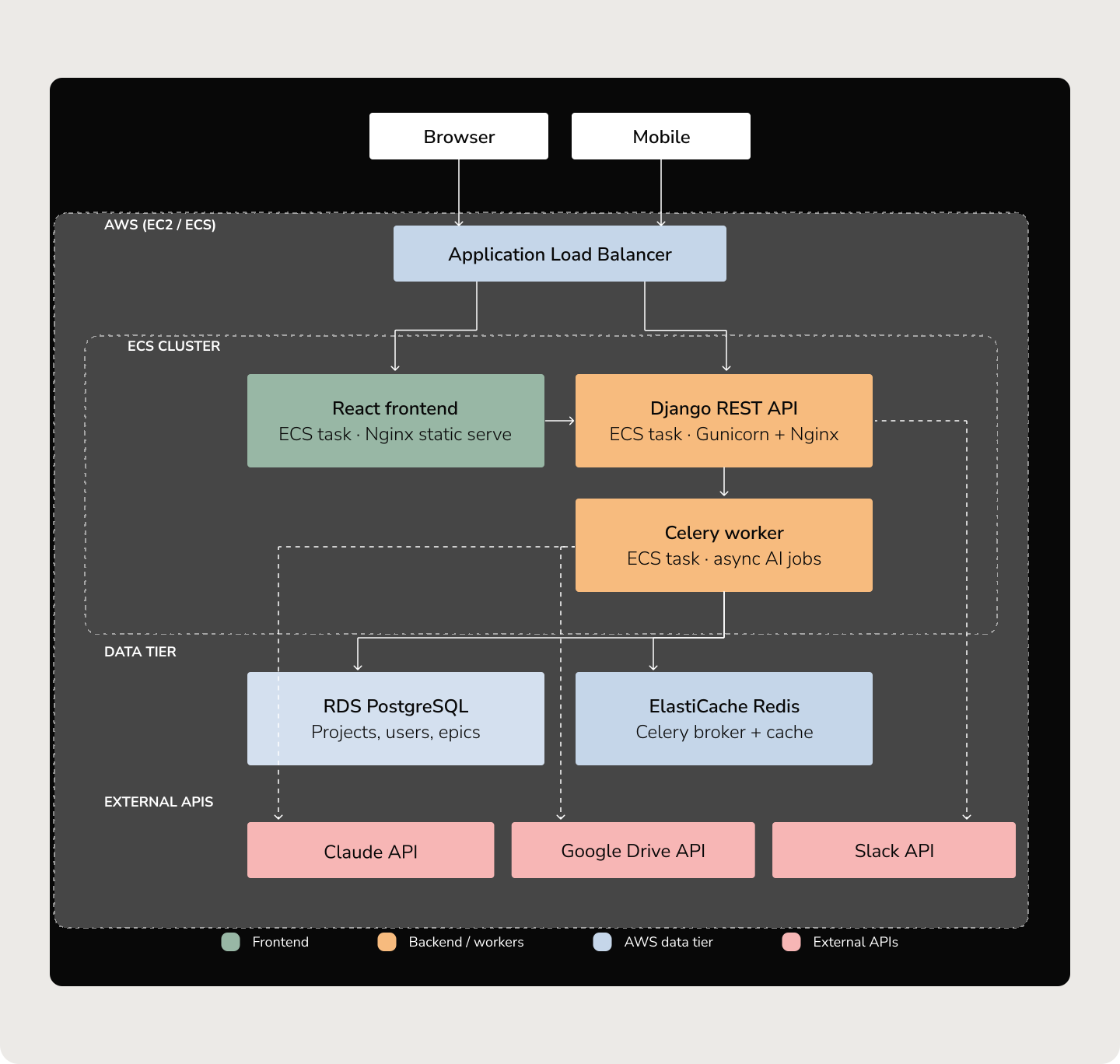
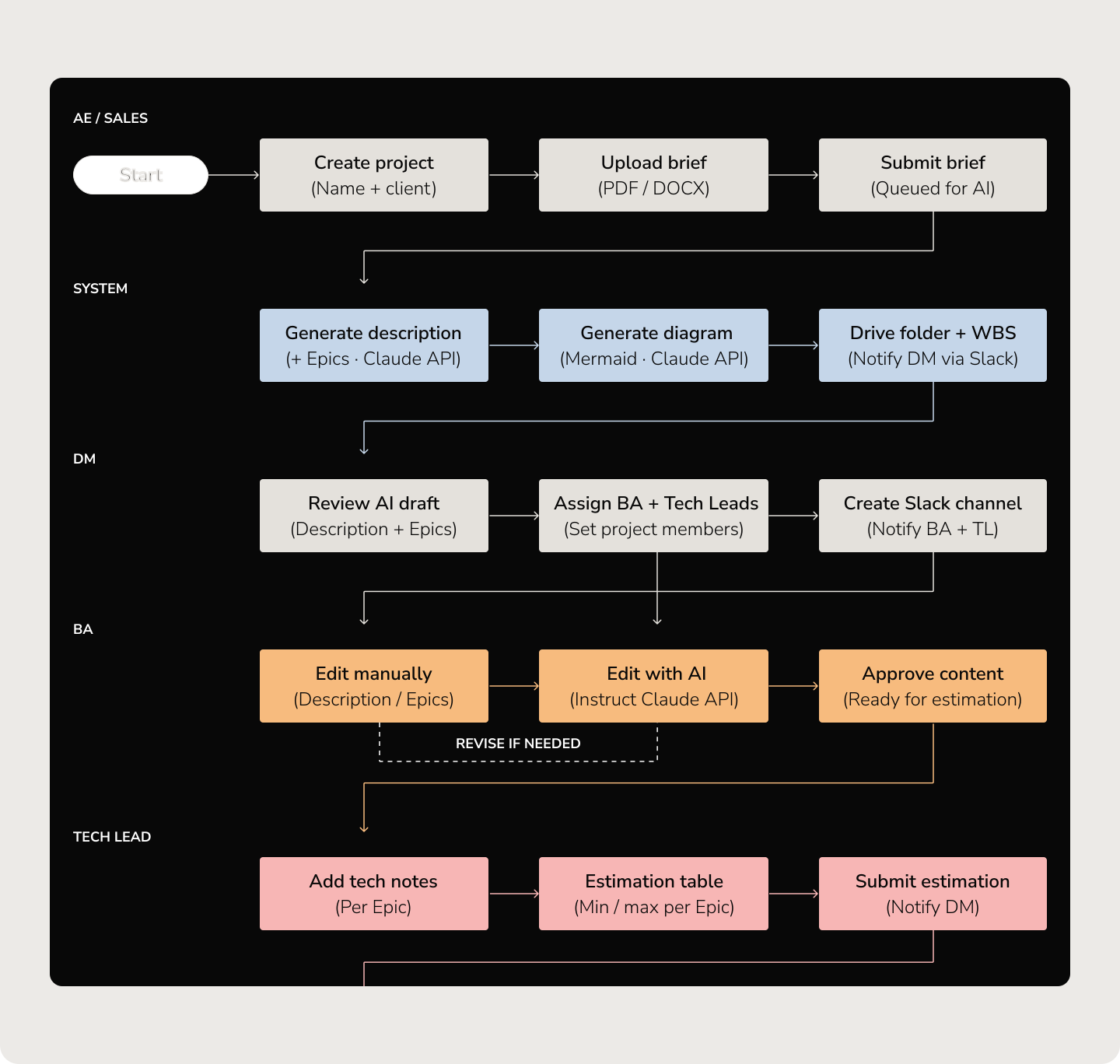
We built a role-aware Django + React platform that automates the entire presales lifecycle while keeping humans firmly in the loop at every decision point. The Claude API powers content generation, while structured workflows, data architecture decisions, RBAC, and full audit logging ensure that every AI draft is reviewed, edited, and approved before advancing to the next stage. Core technical components include:
-
AI-driven brief ingestion and content generation:
Sales users upload briefs (PDF, DOCX, or plain text) directly through the interface; the Claude API analyzes each brief to extract key themes, requirements, and constraints, then generates an initial project description, a structured set of Epics, team composition suggestions, and role-specific job descriptions.
-
Human-in-the-loop review and editable AI outputs:
Every AI output is surfaced as an editable draft that requires explicit approval before advancing; BAs and DMs can edit content manually or trigger targeted regeneration using natural-language instructions (e.g., “Rewrite the authentication Epic to focus on SSO”), preserving human accountability throughout the workflow.
-
Bench registry and automated CV pipeline:
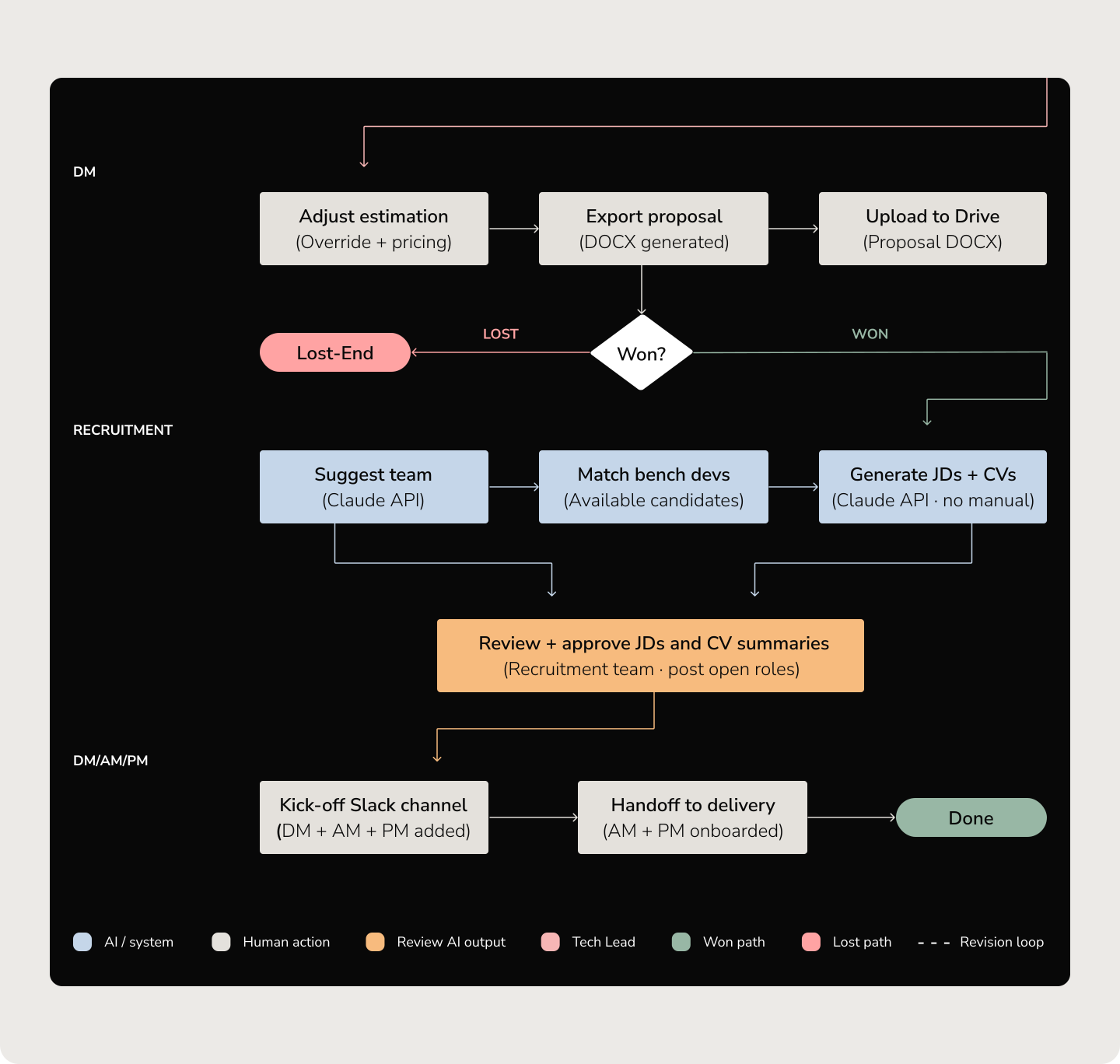
An internal employee registry (with skills, seniority, and availability) drives automated team composition suggestions; once a team is approved, the platform generates client-ready CV summaries from stored developer profiles, eliminating manual reformatting.
-
Structured estimation and proposal generation:
Tech leads submit min/max-hour estimates per Epic via validated forms; the system blocks automated proposal generation until all Epics are estimated, and recalculates total effort and pricing in real time based on configurable role-based rates — before compiling and exporting the finished proposal as a DOCX directly into the project’s Google Drive folder.
-
Role-specific interfaces and pipeline dashboard:
Tailored workspaces for AE/Sales, DMs, BAs, Tech Leads, Recruitment, Account Managers, and Admins ensure each user sees only what they need; a central pipeline dashboard groups all active opportunities by phase (Brief Received, In Estimation, Proposal Ready, Won, Lost) for at-a-glance leadership visibility.
-
Governance, security, and prompt management:
RBAC restricts project access by role; Claude API keys and Drive operations are handled server-side via scoped service accounts, and all data stays within the client’s own Drive and database infrastructure; administrators can view, edit, and version Claude prompts through a dedicated interface, with full audit logging of uploads, generations, edits, and approvals.

Each automated step saved modest amounts of time on its own, but the real impact came from eliminating the handoffs between them. Connecting the workflow to the internal bench registry also gave the team something they’d never had before — a real-time view of whether the right people were available to staff an opportunity before they submitted a proposal.
Results
Following the deployment of the Presale Automation Platform, the consultancy observed significant improvements across every stage of the presales workflow. The combination of Claude-powered drafting, structured human review, and Google Drive and Slack integration reduced both calendar time and coordination overhead, while the role-specific UX drove fast adoption by technical and non-technical stakeholders.
-
Presales cycle time reduced by ~65%
Tasks that previously required multi-day coordination (brief distribution, Epic generation, estimation collection, proposal drafting) were compressed into hours.
-
CV preparation time eliminated
The manual CV reformatting process, which previously took HR staff an average of 30–45 minutes per candidate per opportunity, was fully automated. Recruiters now review and approve AI-generated summaries rather than authoring them from scratch.
-
Proposal quality improved
Standardized AI-generated drafts with consistent structure and DM-editable content reduced variability in proposal quality across team members.
-
Estimation consistency increased
Structured tech lead input forms reduced mismatched or incomplete estimates, giving DMs cleaner inputs for pricing calculations.
-
Pipeline visibility established
For the first time, leadership had a single, real-time view of all presales opportunities by stage, enabling better resource allocation and forecasting.
-
Recruitment kick-off accelerated
AI-generated job descriptions were ready immediately upon project approval rather than being authored post facto, reducing time-to-post for open positions.
Ready to automate your most repetitive workflows with AI?
Free your team from manual coordination overhead and let AI handle the heavy lifting without replacing human judgment. Share your current challenges via the form, and one of our experts will reach out to you shortly.