Hire Agentic AI Developers
Turn your LLM prototype into a system your business can actually run on. Through flexible cooperation models, Beetroot makes it simple to hire AI agent developers who connect models to your tools, data, and approval flows.
-

Top 1% of global
Software Service providers -

ISO 27001 certification
by Bureau Veritas
-

GDPR-Compliant processes
for responsible data protection -

AWS trusted infrastructure
for scalable solutions -

Bureau Veritas —
an independent global leader in testing, inspection, and certification.
Meet Our Agentic AI Developers
AI engineers, platform developers, and integration specialists build agents that complete real tasks. Their work can include scoped permissions, tool connections, and audit trails, along with production deployment and monitoring that keeps people in control of the decisions that matter.










When Do You Need to Hire Dedicated AI Agent Developers?
Many teams already have AI ideas, chatbot experiments, or early prototypes. The hard part is getting from a useful model response to a completed business action. Teams hire AI agent engineers to design the logic, integrations, controls, and production setup that allow agents to work within real business processes.
-
Unclear prompt-to-action path
You have a workflow worth automating but no clear route from a model response to a finished task. Agentic AI engineers map that path, decomposing the workflow, defining each step, and deciding where a human signs off.
-
Disconnected systems
Real value shows up when an agent can read and write to your tools, APIs, CRMs, ERPs, and ticketing systems. Engineers build those integrations with scoped permissions so agents act on the right data without overreaching.
-
Unreliable multi-step tasks
A single-turn AI chatbot for business can answer a question but cannot reliably coordinate several dependent steps. Agentic AI engineers add planning, memory, error handling, and fallback paths to make these workflows more dependable.
-
Missing production controls
Production use calls for human approval, monitoring, and cost limits. Engineers put governance, audit trails, and spend controls in place before anything touches a live process.
-
Not sure which gaps apply to your workflow?
What Our Agentic AI Engineers Bring to Your Project
Building agents takes more than prompt engineering or a basic LLM integration. The right engineers understand orchestration, tool use, memory, system integration, evaluation, and what it takes to bring custom AI agents into production.
-
Agent Workflow Architecture
We design the cognitive loops, planning logic, and task decomposition behind multi-step workflows. That structure gives each step clearer boundaries, so you can trace and debug what the agent does.
-
Framework-Based Agent Orchestration
Our engineers work with frameworks such as LangGraph, CrewAI, and AutoGen to coordinate single- and multi-agent systems. The choice depends on the workflow, existing stack, and level of control required.
-
LLM Integration and Abstraction
An LLM abstraction layer supports model selection, provider flexibility, and fallback logic without tying the system to one vendor. Model routing and provider choice can also help manage run costs as usage grows.
-
Memory and Retrieval Systems
Vector storage memory, persistent context, and RAG help agents carry relevant information across steps and sessions. Retrieval keeps outputs connected to approved knowledge sources, while testing shows how reliably that grounding works.
-
Tool and System Integration
Through tool calling and well-scoped APIs, we connect agents to CRM, ERP, and ticketing systems with the right permissions. That lets an agent work inside existing systems rather than stopping at recommendations.
-
Evaluation, Safety, and Observability
Human-in-the-loop checkpoints, audit trails, testing, and monitoring make it easier to review an agent’s actions and approval history. We build in governance from the start rather than adding it after the workflow reaches production.
Need this mix of skills? Discuss your AI engineering needs.
Practical Workflows for Teams That Hire AI Agent Developers
Agentic AI engineers add the most value when a workflow involves more than a single response. They connect models to tools, systems, data, and approval flows so agents can support real operational tasks while people stay in control of important decisions.
-
Ticket triage and routing
Agents classify incoming support, IT, or operations tickets and route them to the right owner with relevant context attached. Complex or sensitive cases are routed to a human.
-
Document processing and approval workflows
Agents extract and organize data from invoices, claims, and contracts, then prepare them for internal review. A person approves before anything is finalized.
-
FinTech workflow agents
Teams that hire AI agent developers for FinTech often use agents to triage fraud alerts, support reconciliation, and pre-screen compliance documents. Final decisions remain with human reviewers.
-
Manufacturing and factory automation support
Companies that hire manufacturing AI agent developers apply agents to maintenance alerts, production reporting, and quality workflows. These agents assist maintenance, reporting, and quality teams while equipment control stays with people.
-
Internal knowledge and decision support
Agents search across internal sources, summarize what’s relevant, and suggest next steps for a person to act on. They surface information rather than make the final decision.
-
Multi-agent workflow coordination
For complex logistics or cross-system SaaS operations, multiple agents divide a task and coordinate handoffs. Each agent operates within defined responsibilities, approval boundaries, and monitoring controls.
What Does It Cost to Hire AI Agent Developers?
Several factors shape the cost of hiring AI agent developers beyond an individual engineer’s rate. Seniority, cooperation model, workflow complexity, integrations, autonomy boundaries, data readiness, security requirements, and production monitoring all play a part.
-
Teams that hire AI agent developers for factory automation may need a more involved setup because integration, monitoring, and safety requirements tend to be higher. A single engineer may be enough to improve an existing prototype, while a system built for real business use often requires AI engineering, backend and platform development, DevOps/MLOps, QA, and product or business analysis support working together.
Longer commitments and clearly defined scopes usually help optimize rates, while urgent or highly specialized work may call for a more senior setup.
For guidance, our dedicated model starts at:
$180 per day (~$3,400 per month) for entry-level positions on short- to mid-term teams, or from $2,550 per month for long-term cooperation.
$290 per day (~$5,500 per month) for mid-level positions on short-to-mid-term projects, or from $4,150 per month for longer-term cooperation.
Flexible Ways to Hire Remote AI Agent Developers
How you work with us depends on your project’s maturity, your internal capacity, and how you want delivery handled. We’ll adapt the setup to fit, whether you need an embedded team, a defined project, or hands-on training for your own people.
-
Dedicated Development Teams
Best for long-term cooperationBest for long-term collaboration. Build a team around the mix of AI engineering, ML, and cloud skills your roadmap calls for, working within your existing process.
-
Project-Based Solutions
Best for scoped, focused deliveryBest for specific, time-bound goals. We agree on a clear scope and work with you toward defined milestones, from an early build to production.
-
Custom Tech Workshops for Teams
Best for in-house skill-buildingBest for building internal AI skills. Hands-on workshops covering agent design, tool use, memory, and governance, with practical exercises and guidance from experienced engineers.
Not sure which model fits your goals?
How We Vet and Onboard Agentic AI Developers
Strong agentic AI hiring starts with understanding the workflow, technical environment, autonomy boundaries, and your team setup. Our process is structured, transparent, and built around long-term fit instead of a quick profile match.
-
Scope and Role Alignment
Step 1We clarify what you need to build, which tools and systems are involved, what level of autonomy is acceptable, and which skills the role requires. This sets a shared definition of success before anyone is matched.
-
Technical Screening and Profile Matching
Step 2We evaluate the skills that matter: LLM integration, agent orchestration, backend and platform engineering, API integration, cloud infrastructure, security awareness, and communication. Then we match engineers to your specific needs.
-
Client Review and Selection
Step 3You review relevant profiles and speak with selected engineers to confirm technical fit, communication style, and expectations. You decide who joins.
-
Onboarding and Collaboration Setup
Step 4We support onboarding into your tools, rituals, documentation, and delivery process. Where useful, the setup can also include checkpoints for knowledge transfer, progress tracking, and ownership handoff.
Choosing the Right Way to Build Agentic AI Capability
Building agentic AI capability isn’t only about finding specialists who know the right frameworks and tools. The right setup depends on what you want to build, how much internal AI expertise you already have, how complex the integrations are, and whether your project is still a prototype or moving toward production.
What this option means in practice
Deep, narrow AI expertise you can point at a specific problem. Long-term engineering, production readiness, and scale often require additional support beyond a single specialist.
Best for
narrow, clearly scoped tasks, experiments, or short-term technical support.
What this option means in practice
Direct control and strong business context. AI ramp-up can slow delivery or pull the team off its core roadmap.
Best for
companies with strong in-house engineering, clear AI ownership, and capacity to maintain the system long-term.
What this option means in practice
Fast to prototype and validate an idea. Limitations often appear around scale, integration depth, and maintainability.
Best for
quick validation, simple internal workflows, and early experimentation before deeper custom development.
What this option means in practice
Strong fit for enterprise process and procurement. Often heavier than focused AI agent delivery needs.
Best for
broad transformation programs with significant compliance and organizational coordination.
What this option means in practice
Senior AI support that complements your internal team and can include knowledge transfer as the work progresses. This model combines AI expertise with software delivery discipline, system integration, and production governance.
Best for
companies that need senior AI execution, production delivery, integration, governance, and knowledge transfer without building everything in-house.
Not sure which setup gives you the right balance of expertise, control, and delivery support?
Why Hire an Agentic AI Developer from Beetroot?
Beetroot combines senior AI engineering with full software delivery discipline, flexible cooperation models, and a practical approach to responsible AI. We connect you with specialists who can build agent logic while supporting the integrations, governance, infrastructure, and delivery practices required for production use.
-
Senior AI engineering capability
Engage vetted engineers experienced in LLMs, agent orchestration, integrations, and production deployment and maintenance.
-
Full software delivery discipline
Beyond AI logic, we support backend and platform engineering, cloud, DevOps/MLOps, QA, security-aware delivery, and long-term maintainability.
-
Flexible cooperation models
Dedicated teams, project-based delivery, or custom AI workshops, depending on your goals, internal capacity, and delivery needs.
-
Production and governance mindset
For higher-risk workflows, the setup can include human-in-the-loop controls, monitoring, audit trails, and cost controls.
-
Knowledge transfer and team enablement
When knowledge transfer matters, we document key decisions and work closely with your team so ownership stays on your side.
-
Cross-domain experience
Work spanning GreenTech, HealthTech, FinTech, SaaS, manufacturing, logistics, and enterprise software, grounded in what we’ve actually delivered.
What Our Clients Say About Working with Us
Hear directly from clients about working with Beetroot’s engineers and delivery teams.

Featured Work
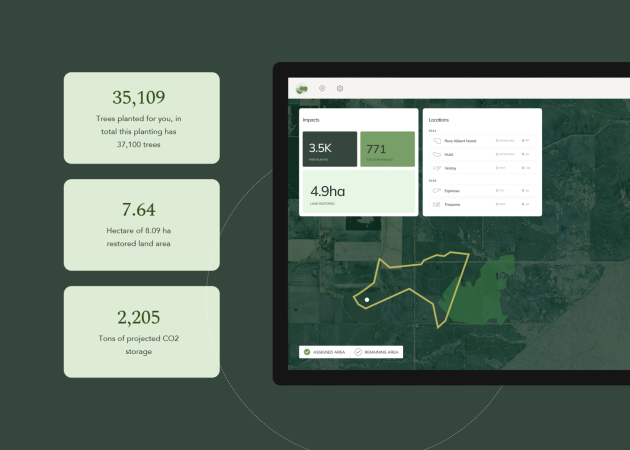
Take a look at projects where our engineers worked on AI, data, and production delivery inside real client environments. Each one reflects how we operate inside a client’s stack and constraints.

Tell Us About Your AI Agent Mission
Have a specific workflow you want agents to support? Tell us about the systems involved, the outcomes you’re aiming for, and any operational requirements. We’ll help you determine the right engineering setup for moving from prototype to production.

FAQs
Here are answers to some of the most common questions about hiring agentic AI developers and choosing the right cooperation model.