Hire LlamaIndex Developers
A RAG prototype might work in a demo and still struggle with real enterprise data. Beetroot can help you bring in specialized LlamaIndex developers to design production-ready retrieval systems around your data, architecture, and quality requirements.
-

Top 1% of global
Software Service providers -

ISO 27001 certification
by Bureau Veritas
-

GDPR-Compliant processes
for responsible data protection -

AWS trusted infrastructure
for scalable solutions -

Bureau Veritas —
an independent global leader in testing, inspection, and certification.
Meet Our LlamaIndex Developers
Beetroot can provide AI and data engineers with relevant experience in LlamaIndex, RAG architecture, and the data engineering foundations behind useful enterprise retrieval systems.








When do you need to hire LlamaIndex developers?
Companies usually need LlamaIndex developers when an LLM product requires reliable access to private, complex, or scattered enterprise data. The challenge lies in designing the ingestion, indexing, retrieval, and evaluation layer that makes answers useful and trustworthy.
-
Unreliable Access to Internal Knowledge
Your LLM app needs to retrieve relevant information from internal documents, knowledge bases, or enterprise systems, but answers vary in quality or miss important context. LlamaIndex developers design retrieval pipelines that structure how approved data is indexed, searched, and supplied to the model.
-
RAG That Works in Demos but Breaks in Practice
Your prototype delivers plausible answers in controlled tests but gives inconsistent or incomplete responses with real users and documents. LlamaIndex engineers identify where retrieval breaks down, then adjust chunking, index design, and query transformation against representative queries.
-
Messy, Multi-Format Enterprise Data
Your data lives in PDFs, policy documents, tables, support tickets, knowledge bases, and disconnected internal tools. LlamaIndex developers build ingestion and parsing workflows that handle format differences, extract structure and metadata, and prepare the content for retrieval.
-
Retrieval Quality That Needs Real Engineering
Improving answer relevance means going beyond basic vector search — better chunking, metadata tagging, hybrid search, query transformation, and evaluation. LlamaIndex developers bring depth to make these improvements systematic and measurable.
-
Recognize your situation? Let's talk about what your retrieval layer needs
RAG and Retrieval Capabilities for LlamaIndex Projects
LlamaIndex development is more than adding a vector database to an LLM app. Based on your data environment and project needs, Beetroot can connect you with engineers whose experience covers the relevant parts of the retrieval stack — from data ingestion and parsing to query optimization, evaluation, and end-to-end production delivery.
-
RAG Architecture and Data Source Mapping
Early architecture work starts with understanding what the application needs to retrieve and where that information lives. Beetroot can connect you with engineers who know how to shape the retrieval layer around source systems, access rules, and the way the application will use the data.
-
Document Ingestion and Parsing Workflows
Business documents rarely arrive in one clean format. Depending on the source material, the project may need experience in ingestion pipelines, metadata extraction, and document chunking for PDFs, reports, policies, knowledge bases, support tickets, or product documentation.
-
Chunking and Node-Parsing Strategies
Where document structure is a major challenge, we can identify engineers familiar with hierarchical node parsing, sentence window retrieval, and related approaches. The right strategy depends on how the source content is organized and what users need to retrieve from it.
-
Vector Database and Semantic Search Integration
Our engineers integrate leading vector databases, including Pinecone and Qdrant, and configure embedding-based retrieval for your specific document types and query patterns. Semantic search accuracy depends heavily on how indexes are structured and maintained.
-
Retrieval Optimization and Query Transformation
When retrieval results are inconsistent, the fix is rarely obvious. Beetroot can bring in engineers who work with query transformation, hybrid search, reranking, and retrieval evaluation to improve answer relevance across complex multi-source data environments.
-
Evaluation, Monitoring, and Production Readiness
Retrieval quality is measurable if you build the right evaluation framework. Beetroot’s developers set up accuracy checks, observability, and performance monitoring alongside data access controls and security-aware implementation.
Want to discuss how these capabilities apply to your specific data environment?
What You Can Build with LlamaIndex Expertise
With the right LlamaIndex and data engineering support, enterprise information can become easier to search, explore, and use inside LLM applications. The result may be a focused internal tool, a retrieval layer for an existing product, or a broader RAG system connected to several business sources.
-
Enterprise Knowledge Assistants
Surface relevant information from internal documentation, policies, product specs, and team resources, so employees get focused answers without searching through long documents first.
-
Document Search and Q&A Systems
Search and answer questions across large repositories of reports, contracts, PDFs, support documents, and manuals, with a retrieval layer that understands document structure and context rather than keywords alone.
-
RAG Pipelines for Complex PDFs and Tables
Handle documents that include tables, semi-structured content, financial reports, regulatory filings, and multi-page business files, where standard chunking strategies fall short, and context is easily lost.
-
Internal Support and Operations Knowledge Bases
Help support, operations, HR, sales, and technical teams find relevant answers across distributed internal sources, reducing time spent searching across systems and escalating unresolved questions between teams.
-
LLM Apps Connected to Enterprise Data Warehouses
Make structured data from enterprise data warehouses accessible to AI-powered search, analytics, and internal decision support. Beetroot’s enterprise data warehousing services can support the underlying data foundation where needed.
-
Retrieval Layers for AI Chatbots and Agents
Ground chatbots, copilots, and agentic workflows in your business data instead of generic model knowledge, with source references and access controls shaped around the use case.
How much does it cost to hire a LlamaIndex developer?
The cost depends on developer seniority, project complexity, data source variety, document formats, retrieval accuracy requirements, and whether you need a single specialist or a broader team. Longer commitments and clearly defined scopes generally help optimize rates, while urgent or highly specialized RAG work may require a more senior setup. Beetroot’s dedicated cooperation model offers transparent benchmark rates
-
Mid-level LlamaIndex developers start at $290 per day, or approximately $5,500 per month for short-to-mid-term projects and from $4,150 per month for longer-term cooperation.
-
Entry-level and supporting engineers start at $180 per day, or approximately $3,400 per month for short-to-mid-term engagements and from $2,550 per month for long-term cooperation.
Choose the Cooperation Model That Fits Your RAG Roadmap
Beetroot supports different engagement structures depending on your project maturity, internal capacity, and delivery goals. Whether you need embedded specialists, a scoped delivery with clear milestones, or hands-on training to build internal capability, you can pick the model that matches where your project stands today.
-
Dedicated Development Team
Best for long-term partnershipOne or more LlamaIndex engineers join your delivery process for an extended period. This works well when you need consistent capacity and domain continuity across ongoing development and later production work.
-
Project-Based Delivery
Suited to specific, time-bound goalsA defined engagement with clear scope: building a retrieval pipeline, integrating a vector database, and improving chunking and evaluation. Suited to specific technical milestones with an end date and defined output.
-
Custom AI Workshop
Best for advanced AI skill developmentStructured sessions for teams building internal AI capability, covering RAG architecture decisions, LlamaIndex fundamentals, retrieval evaluation, and production considerations. Learn more about custom tech workshops for teams.
Not sure which model fits your business case? Compare the options with our team
How We Match LlamaIndex Developers to Your Project
Successful LlamaIndex hiring starts with understanding your data environment, retrieval requirements, integrations, and team setup. Beetroot’s process is structured, transparent, and focused on long-term fit.
-
Scope and Data Environment Review
Step 1Beetroot begins by clarifying what you want to build, what data sources are involved, what document types need to be processed, and what retrieval quality you’re aiming for. This shapes the technical profile we look for and helps you avoid over- or under-specifying the role from the start.
-
Technical Screening and Profile Matching
Step 2We evaluate relevant skills: LlamaIndex, Python, RAG architecture, vector database integration, document parsing, retrieval optimization, cloud infrastructure, and security awareness. Communication style and collaboration fit matter as much as technical depth — we assess both.
-
Client Review and Developer Selection
Step 3You review shortlisted profiles and speak directly with the developers or team members under consideration. The goal is to confirm technical fit, communication style, and realistic project expectations before any commitment is made.
-
Onboarding and Collaboration Setup
Step 4Beetroot supports onboarding into your tools, documentation, data access processes, and delivery workflow. Where relevant, we define checkpoints for knowledge transfer, progress tracking, and ownership handoff to support maintainability beyond the initial engagement.
Choosing the Right Way to Build Enterprise RAG Capability
Hiring LlamaIndex developers goes beyond finding specialists who know one framework. The right setup depends on your internal AI and data maturity, data complexity, retrieval accuracy requirements, integration depth, production expectations, and preferred level of ownership. Each path carries different trade-offs across control, speed, and total cost of ownership.
What This Option Means in Practice
Works well for broader AI or LLM tasks where RAG complexity is limited and deep LlamaIndex expertise is not the main requirement. More complex data sources or strict retrieval-quality targets may call for a retrieval specialist alongside the broader AI role.
Best for
Early-stage LLM features and general chatbot work.
What This Option Means in Practice
A strong fit for companies with solid in-house data engineering, clear AI ownership, and the capacity to maintain the retrieval layer long-term. Works best when the team already understands LlamaIndex or can invest in building that expertise internally.
Best for
Teams with existing AI capability and bandwidth.
What This Option Means in Practice
A practical option for narrow, clearly scoped implementation tasks — prototype improvements, specific integration work, or short-term technical support. May be less suitable for ongoing delivery or multi-system integration that requires sustained ownership.
Best for
Specific technical tasks with a clear endpoint
What This Option Means in Practice
A reasonable starting point for quick validation, simple internal search workflows, and early-stage experimentation. Can become limiting if you need custom document parsing, fine-grained retrieval control, or production-grade evaluation and observability.
Best for
Prototyping, simple internal use cases.
What This Option Means in Practice
Suited to companies that need specialized RAG expertise, production delivery discipline, data integration depth, retrieval optimization, and knowledge transfer — without building everything internally from scratch. Works particularly well when the data environment is complex or internal AI capacity is still growing.
Best for
Production RAG, complex data, multi-source integration.
Still deciding which setup fits your RAG project? We can help you compare the options
Why Hire LlamaIndex Developers with Beetroot
Beetroot combines AI and data engineering capability with full software delivery discipline, flexible cooperation models, and a grounded approach to production-ready LLM systems.
-
Specialized AI and Data Engineering Capability
Access engineers selected for relevant experience in AI, data, RAG architecture, document ingestion, vector search, and retrieval evaluation. The focus extends beyond a working demo to integration and production readiness.
-
Full Software Delivery Discipline
Extend delivery across the whole stack: backend and platform engineering, cloud, DevOps and MLOps, QA, security-aware delivery, and long-term maintainability.
-
Flexible Cooperation Models
Choose dedicated teams, project-based delivery, or custom AI workshops, matched to your project maturity, internal capacity, and goals as they evolve.
-
Production and Governance Mindset
Production work covers more than retrieval logic. Depending on the system, the team can also address monitoring, access controls, evaluation, maintainability, and security requirements.
-
Knowledge Transfer and Team Enablement
Build lasting in-house capability through hands-on collaboration, shared documentation, and agreed ownership handoffs. Internal teams keep the context they need to maintain and extend the system.
-
Experience Across Data-Heavy Domains
Relevant work spans FinTech, HealthTech, GreenTech, SaaS, MarTech, and enterprise software, including projects with complex data and integration requirements.
Our Clients Say
See what clients say about working with Beetroot’s engineers and delivery teams.

Beetroot in Action
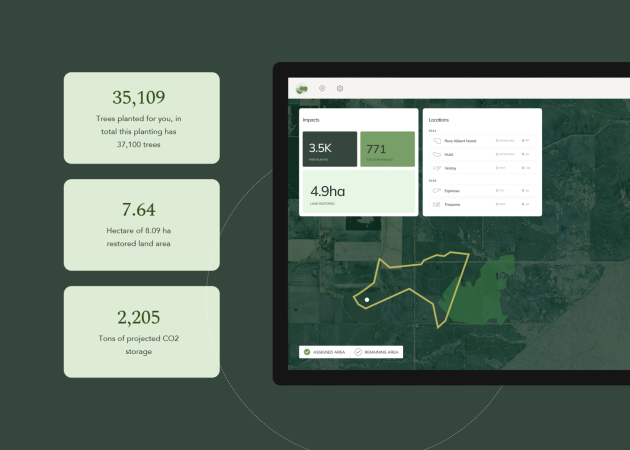
These projects show relevant work across RAG, data pipelines, AI integration, and production delivery in complex client environments.



Tell Us About Your RAG Project or Data Challenge
Tell us about your data environment, retrieval requirements, and where the current system is falling short. We’ll help you assess what kind of engineering expertise and cooperation model fits the work.

FAQs
These FAQs explain what to consider when hiring LlamaIndex developers for an enterprise RAG project.