Hire MLOps Engineers
Scale your machine learning delivery with MLOps engineers matched to your production environment. We adapt to how you work, be it automated training pipelines, drift monitoring, or scalable cloud infrastructure, with post-release support aligned with your setup and ownership needs.
-

Top 1% of global
Software Service providers -

ISO 27001 certification
by Bureau Veritas
-

GDPR-Compliant processes
for responsible data protection -

AWS trusted infrastructure
for scalable solutions -

Bureau Veritas —
an independent global leader in testing, inspection, and certification.
Meet Our MLOps Engineers
Our engineers work across model deployment, pipeline automation, cloud infrastructure, and production monitoring. The profiles below show the experience we match to your stack.



When Do You Need an MLOps Engineer?
Training a model and running it reliably in production are separate engineering problems. Teams usually decide to hire an MLOps engineer when experiments work well, yet releases stay manual, performance changes go unnoticed, and data scientists spend their days on infrastructure.
-
Models stay stuck in notebooks
Your models perform in experiments but never reach users because packaging, serving, and integration keep slipping down the list. An MLOps engineer builds the deployment path into the product that needs it.
-
Releases are slow and fragile
Every model update depends on manual steps and on the one person who remembers the correct order. CI/CD for machine learning makes releases repeatable and gives you a rollback route when a version misbehaves.
-
Production performance changes without visibility
You hear about degraded predictions from users or from a business metric rather than from your own monitoring. Drift detection, data quality checks, and alerting shorten the time between a change and your response.
-
Data scientists maintain infrastructure by hand
Research time goes into environment setup, cluster configuration, and rerunning failed jobs. ML pipeline automation moves that work to engineers who do it daily and returns modeling hours to your data team.
Talk through the production gaps in your ML setup
What Our MLOps Engineers Specialize In
MLOps sits at the intersection of machine learning, data workflows, cloud infrastructure, and software operations. The MLOps engineer skills below describe what our engineers do inside your environment, alongside our broader MLOps services.
-
ML Pipeline Automation and Orchestration
We connect data ingestion, preprocessing, feature workflows, training, and validation into scheduled pipelines that reduce manual effort and make runs easier to reproduce.
-
CI/CD for Machine Learning
Automated testing, validation, environment promotion, and rollback controls make model releases more repeatable and easier to recover when a version underperforms.
-
Model Deployment and Serving
Containerization with Docker, API-based serving, and environment configuration make models available to the applications that consume them, in the cloud, in a hybrid setup, or on-premises when data residency requires it.
-
Model Monitoring and Drift Management
Performance monitoring, drift detection, anomaly alerts, and dashboards show how models behave after release. Retraining triggers can prompt investigation or an updated training run when performance declines.
-
Cloud Infrastructure and Scalable Compute
Kubernetes and infrastructure as code give you environments that scale with model usage instead of manual setup. We size architecture around workload, latency, and cost requirements, so infrastructure behavior stays visible as inference volumes grow.
-
Versioning, Reproducibility, and Governance
Model registries, experiment tracking with MLflow, and data versioning with DVC help teams reproduce results and trace releases over time. Access controls and audit trails clarify which data, code, configuration, and model version reached production.
-
See how these capabilities map to your current stack
MLOps Workloads Our Engineers Can Support
Companies that hire MLOps engineers usually have a specific production problem in mind. Common assignments include:
-
Productionizing an Existing Model
We package and deploy a trained model, validate its behavior, then connect it to the service where its predictions are used. The work covers serving setup, integration testing, and a repeatable release process.
-
Standardizing the Experiment-to-Production Handoff
We define how work moves between data scientists, ML engineers, software teams, and operations, so shared conventions remove the guesswork and reduce manual coordination.
-
Automating Training and Release Pipelines
Data preparation, training, validation, approvals, and deployment run as one automated sequence, with checkpoints where people are needed. Each run can be traced to its inputs, code, model configuration, and resulting artifacts.
-
Implementing Model and Data Observability
We instrument model quality, drift, infrastructure performance, pipeline failures, and upstream data changes in one place, so your team sees production behavior without assembling reports by hand.
-
Scaling Inference and ML Infrastructure
As usage grows, we tune compute allocation, container orchestration, and reliability targets while keeping cost visible, so scaling rests on measured demand.
-
Modernizing Fragmented MLOps Environments
Disconnected scripts, notebooks, and one-off tools get consolidated into maintainable workflows with versioning and documented ownership, so onboarding depends less on who wrote which script.
What Does It Cost to Hire an MLOps Engineer?
Cost depends on seniority, your cloud environment, pipeline complexity, security requirements, how critical the workload is, and whether the engineer joins an established ML platform team or builds the foundations. One engineer can cover a defined pipeline or a monitoring scope, while larger environments often need data engineering, cloud and DevOps, QA, or architecture support alongside MLOps.
It also helps to separate an in-house MLOps engineer salary, with its recruitment and retention costs, from the rate of external cooperation. Longer commitments and a clear scope usually help optimize rates, while urgent or highly specialized work calls for a more senior setup.
-
Dedicated model rates start at $276 per day, roughly $5,250 per month, for entry-level positions on short-to-mid-term teams, or from $4,375 per month for long-term cooperation.
-
Mid-level positions start at $411 per day, roughly $7,800 per month, or from $6,500 per month for longer-term cooperation.
Cooperation Models That Fit Your Delivery Setup
How we work together depends on your ML maturity, internal capacity, and delivery needs. You can add a remote MLOps engineer to your team, hand over a defined outcome, or build the skills of the people you already have.
-
Dedicated Development Teams
Long-term capabilityEngineers can join your team long-term and support your ML platform through model lifecycle management, releases, and infrastructure work. Best for companies adding consistent MLOps capability to an internal data or AI team.
-
Project-Based Solutions
Milestone-driven deliveryWe take responsibility for delivery within a defined scope: a deployment pipeline, monitoring setup, infrastructure migration, or improvement to CI/CD for ML. Best for teams with a scoped goal and timeline.
-
Custom Tech Workshops
Team enablementExpert-led sessions cover deployment automation, model monitoring, versioning, and cloud infrastructure, practiced on your own workflows. Best for teams building MLOps skills inside an existing data or engineering group.
Unsure which model fits your stage? Tell us what you need to get into production
How We Vet and Onboard MLOps Engineers
A good match depends on your ML maturity, infrastructure, data stack, deployment environment, and how responsibilities are split inside your team. The process follows Beetroot’s broader approach to helping clients hire software developers for any stack, with technical screening tailored to production ML.
-

Scope and Role Alignment
We clarify which models and workloads are involved, where the bottlenecks sit, what your cloud environment and toolchain look like, and where ownership boundaries lie. That conversation also settles the cooperation model and the seniority needed.
-
Technical Screening and Profile Matching
Our tech leads assess experience in ML pipelines, cloud infrastructure, containerization, CI/CD, model serving, monitoring, and data engineering, then shortlist engineers who fit your environment.
-
Client Review and Selection
You review the profiles and interview the engineers you find promising, checking technical depth, communication style, and team fit. Nobody joins your project without your decision.
-
Onboarding and Collaboration Setup
We support access provisioning, documentation handover, tooling alignment, and delivery rituals in the first weeks. Ownership of production responsibilities is agreed up front.
Choosing the Right Way to Build MLOps Capability
The right route depends on how mature your ML work is, what expertise you hold in-house, which regulatory constraints apply, how critical your models are, and whether you need one specialist or multidisciplinary support. Here is what each option looks like in practice.
An MLOps consultant brings focused expertise and starts quickly on an assessment or a narrow improvement. Broader delivery usually needs additional specialists.
Best for: Short, well-defined engagements with a clear deliverable.
A permanent hire gives you direct ownership and deep organizational context. Recruitment can take time, and one specialist has limits in a complex environment.
Best for: Stable platforms with a steady, long-running workload.
MLOps as a service offerings can provide faster access to standardized deployment and monitoring capabilities, with much of the setup already decided. Customization, portability, and governance are worth checking early.
Best for: Standardized workloads that fit the platform’s operating model.
Large firms bring broad delivery capacity and formal governance structures. For a focused MLOps initiative, that setup can be heavier than the work requires.
Best for: Multi-year, organization-wide transformation programs.
You get flexible access to MLOps, data engineering, ML, cloud, QA, and architecture expertise, with the team composition adjusted as the work does. Organizations comparing a technology partner with an MLOps staffing agency or conventional MLOps outsourcing should also consider documentation, workflow handover, knowledge transfer, and access to adjacent disciplines.
Best for: Companies that need production expertise now and internal capability after the engagement ends.
Weighing your options for production ML?
Why Work With Beetroot's MLOps Engineers
We combine AI engineering with software delivery discipline and a practical view of what responsible ML in production requires. Our AI development services and data engineering services teams work alongside MLOps engineers when scope calls for it.
-
Specialized ML, Data, and Cloud Capability
Engineers who understand how models, data pipelines, infrastructure, and applications depend on one another in production.
-
Full Software Delivery Discipline
When scope requires it, we add data engineering, AI/ML, backend, cloud, QA, and architecture support to the team.
-
Flexible Cooperation Models
Start with one engineer, grow into a dedicated team, or scope a single project, and change the setup as your platform matures.
-
Production and Governance Mindset
We build monitoring, versioning, rollback paths, access control, and auditability into the setup based on the workload, risk level, and agreed ownership.
-
Knowledge Transfer and Team Enablement
When it’s included in the scope, we document workflows and share working practices, so your team can operate with less reliance on external specialists.
-
Experience With Complex AI and Data Systems
Our published cases cover predictive analytics, computer vision, and AI assistant work with the engineering support these systems need.
MLOps Needs We Address Across Industries
-
SaaS and AI Products
Model serving, feature pipelines, multi-tenant infrastructure, and scalable inference.
-
FinTech
Infrastructure and monitoring for models used in fraud analysis, risk assessment, and other controlled financial workflows.
-
HealthTech
Reproducible ML pipelines, access controls, documented deployments, and monitoring for sensitive data environments.
-
Logistics and Supply Chainl
Production support for forecasting, routing, demand planning, and anomaly detection models.
What Our Clients Say
See what clients say about working with Beetroot’s engineering teams.

Featured Cases
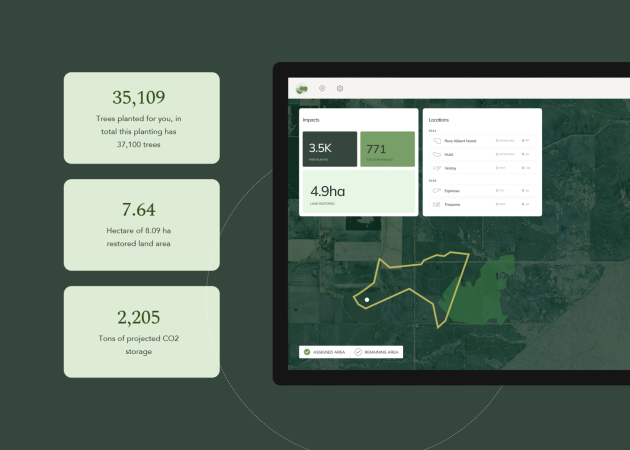
While some of our work stays confidential, the cases we can share show how we move AI and ML systems toward production through data pipelines, cloud infrastructure, and long-term engineering support.

Let's Talk About Your Production ML Setup
Tell us which models you are running, where they need to go, and what is slowing the process down. We’ll help you identify the expertise and cooperation setup that would move the project forward.

FAQs
This section explains what to consider when hiring MLOps engineers for production machine learning.