Custom Energy Management System Development
Bring your energy data, assets, and workflows into software that fits how you already operate. Our experts help organizations and energy-tech companies design, build, integrate, or evolve custom energy management software.
-

Top 1% of global
Software Service providers -
ISO 27001 certification
by Bureau Veritas
-

GDPR-Compliant processes
for responsible data protection -

AWS trusted infrastructure
for scalable solutions -

Bureau Veritas —
an independent global leader in testing, inspection, and certification.
When does your organization need custom energy management software?
Custom EMS (energy management system) development becomes relevant when your existing tools, data, and integrations no longer keep up with how you need to monitor, analyze, manage, or evolve your energy operations. These are the signals that a custom software layer may be worth considering.
-
Scattered Energy Data
Your meters, BMS/SCADA, IoT devices, utility feeds, and spreadsheets all track energy separately, so no one place shows the whole picture. Every question about consumption turns into a reconciliation exercise.
-
Off-The-Shelf Software Doesn't Fit
Your asset mix, workflows, user roles, and integration needs are specific enough that a standardized EMS product can’t accommodate them without compromises. You end up bending operations to fit the tool instead of the other way around.
-
Fragmented Multi-Site Visibility
When energy data is spread across facilities, regions, devices, and platforms, a single consistent operational view is hard to assemble. Comparing performance or catching issues across the portfolio becomes manual work.
-
Manual Reporting & Performance Tracking
Energy-performance reporting still runs on manual reconciliation and spreadsheets, so KPIs are slow to prepare and quickly go stale. Keeping consistent performance data across teams and sites takes more effort than the insight returns.
-
Optimization Or Control Needs Custom Logic
Generic workflows can’t express the tariff logic, demand response, load coordination, or storage and charging behavior an energy management control system needs to handle. Once decisions depend on your own constraints and controllable systems, you need logic built for them.
-
Hard-To-Extend Energy Platform
Legacy architecture, missing APIs, fragile integrations, and poor maintainability make your current platform expensive to change. When a commercial energy product needs new functionality, a full rebuild shouldn’t be the only option.
-
Not sure which of these is holding your energy operations back? Review your energy management setup:
Core Energy Management Software Capabilities We Help Implement
No two systems need the same mix — the right set of capabilities depends on your assets, users, data, operating environment, and how much you want to automate.
-
Real-Time Energy Monitoring
Track consumption, generation, demand, storage, and equipment status across connected assets and sites, with real-time metering where the use case calls for it. Compare current readings with historical data to help operators identify unusual patterns and early signs of developing problems.
-
Energy Analytics & Insights
Turn raw readings into trends, baselines, comparisons, and cost breakdowns your team can act on. Energy analytics is where anomalies and performance shifts become visible, often supported by dedicated data analytics services.
-
Energy Forecasting
Project consumption, demand, generation, or pricing wherever you have enough history and context for the numbers to be worth acting on. Forecasts feed planning, procurement, and any optimization decision that depends on anticipating what can happen next.
-
Dashboards & Reporting
Give operators, energy managers, and executives the multi-site dashboards, alerts, and energy performance indicators (EnPIs) each role needs. Reporting can extend to sustainability and compliance reporting, and to business intelligence services where deeper reporting is part of the remit.
-
Energy Optimization
Apply rules, forecasts, or optimization models to decisions about load profiles, storage behavior, tariffs, and demand response. Each model works toward a defined objective, whether that is lower cost, flatter demand, or better use of on-site generation.
-
Energy Control & Automation
Connect software to controllable assets or existing controllers for operator-approved or automated responses where the infrastructure justifies it. Any automation stays inside the technical and safety boundaries set by your systems and policies.
Our Energy Management Software Development Services
Turning an energy management plan into working energy management system software takes several distinct workstreams. Our teams cover the ones your project needs, from architecture through to the layers you are missing, without rebuilding what already works.
-

EMS Discovery & Solution Architecture
Start development knowing what genuinely needs building and what to leave alone. Our architects can work through your energy goals, workflows, existing infrastructure, and control boundaries first, then help define a target design grounded in how you actually operate.
-
Energy Data & Metering Integration
Bring fragmented energy data into one reliable foundation. Our energy data integration work can connect smart meters, sensors, BMS/SCADA, IoT devices, utility feeds, and third-party systems around the architecture you already run.
-
Backend & Energy Platform Development
Get a platform that stays operable and extensible as your energy environment changes. Our engineers can build or modernize the foundation underneath it, from APIs and business logic to asset models and permissions.
-
IoT, Edge & Embedded Integration
Let the software reach the physical infrastructure it needs to, whether that means gateways, field devices, or edge processing. Where your case calls for it, we can connect those layers through embedded software development, splitting work between edge and center according to latency and connectivity.
-
Cloud Infrastructure & Scalability
Run the system on infrastructure sized to your device volume, data throughput, and number of sites. Our specialists can design cloud, hybrid, or distributed setups through cloud application development, built around availability, latency, security, and integration needs.
-
Energy Analytics & ML Engineering
Add forecasting, anomaly detection, or optimization where the data and the problem genuinely support them. Our engineers can build the data-processing and, where warranted, machine-learning components, matching the method to what the data can do instead of reaching for ML by default.
-
Web, Mobile & Dashboard Development
Give energy managers, facility teams, operators, and end customers interfaces shaped to how each of them works. The web, mobile, and dashboard views we build can follow the decisions each role actually has to make.
-
QA, DevOps & System Reliability
Support dependable releases and stable system operation once software is wired into live energy infrastructure. Our experts help hold that together through testing, CI/CD, observability, and maintainable deployment across the connected components.
-
Tell us where your current setup falls short and we will map the workstreams that fit:
Flexible Cooperation Models
We work in whichever model fits: ongoing capacity, a clearly scoped piece of work, or hands-on skill-building for your own team.
-
Dedicated Development Teams
Optimal for the long runBest when an EMS, energy-tech product, or connected platform needs continuous development alongside your own people. Specialists work closely with your existing software, product, data, or energy team and stay with the system as it evolves.
-
Project-Based Solutions
Best for milestone developmentSuited to a clearly scoped initiative with a defined start and finish: an EMS build, a modernization, a specific integration, an analytics module, a mobile or web application, or an architecture project. You get an agreed scope and a clear endpoint, without committing to an ongoing team.
-
Custom Tech Workshops for Teams
Strategic capability buildingPractical, tailored sessions that build your team’s capability in the technologies behind your energy software. Content is shaped to your stack and goals, focused on hands-on engineering skills.
Tell us how your team is set up and we will suggest a working model that fits:
Tools & Technologies We Work With
We select technology to fit each project’s data, deployment environment, security constraints, and existing client ecosystem. The tools below reflect what our teams use across GreenTech, energy, and connected-system work.
-
Backend & APIs
- Python
- Django
- FastAPI
- Node.js
- Rust
- REST APIs
-
Frontend & Mobile
- React
- React Native
- Remix.js
- Expo
-
Cloud & Infrastructure
- AWS
- Azure
- Docker
- AWS Lambda
-
Data, Streaming & Storage
- PostgreSQL
- DynamoDB
- Apache Kafka
- Elasticsearch
- Amazon S3
- Apache Airflow
-
IoT & Connectivity
- IoT device & smart-meter integration
- edge/embedded connectivity
-
Analytics, ML & BI
- PyTorch
- Prophet
- Grafana
- Time-series forecasting
Meet Your Energy Management Software Development Team
EMS development rarely needs one kind of specialist. Depending on the system type, a project may combine software, data, cloud, IoT, product, and analytics expertise, and the right mix is shaped around what you are building.



Our Energy Management System Development Roadmap
Every engagement starts by understanding your energy environment before any code is written, then moves through design, build, and validation to a system your team can run and evolve. The stages below describe how we work together.
-
Energy Goals & Discovery
Step 1We start by clarifying what the system needs to achieve, who will use it, and what constraints it has to work within. This is where we separate what needs custom development from what already works.
-
Asset, Data & Integration Assessment
Step 2Next we map your existing meters, devices, systems, and data sources to see what can be reused and what needs connecting. The assessment grounds every later decision in your real infrastructure.
-
Architecture & Product Design
Step 3With the landscape understood, we define the architecture and design the layers your project actually requires. Scope, boundaries, and technical approach are all agreed here before build begins.
-
Development & Integration
Step 4We build and integrate in iterations, connecting to your systems and delivering working increments. You see progress early and can adjust as priorities shift.
-
Testing & Operational Validation
Step 5Each increment is tested for reliability and validated against how the system will actually operate, including any control behavior where the project involves controllable assets.
-
Deployment, Handover & Continuous Evolution
Step 6We deploy, hand over the documentation and knowledge your team needs, and can keep evolving the system as your energy environment changes. The engagement can continue past launch without locking you into permanent dependency.
Types of Energy Management Systems We Help Build
Monitoring, analytics, forecasting, optimization, dashboards, and control combine differently depending on your assets and how you operate. Here are the energy environments where custom software development can support those needs.
-
Building Energy Management Systems
Commercial and multi-building operators need data from meters, HVAC, lighting, and building systems in one place. We build the software, integration, and interface layers around a building energy management system.
-
Distributed Energy Resource Management Systems
Coordinating solar, batteries, flexible loads, and EVs across utility, aggregator, or microgrid settings is its own discipline. A distributed energy resource management system (DERMS) is the specialized software category for it, connecting distributed assets rather than acting as a general-purpose EMS.
-
Battery & Energy Storage Management Software
Storage assets need a software layer above the hardware to decide how they behave against loads, renewables, tariffs, and grids. A battery energy management system at this level stays distinct from the low-level BMS that handles cell protection and safety.
-
EV & Charging Energy Management Systems
Charging infrastructure carries its own constraints: charging demand, charger availability, load balancing, tariffs, and site limits. An EV energy management system coordinates across them, connecting with charging assets.
-
Industrial Energy Management Systems
Factory and industrial sites generate energy data across equipment, utilities, production processes, and meters, usually in isolation. Connecting it to real operational context is what makes it useful to the people running the floor.
-
Multi-Site Energy Management Systems
Organizations running portfolios of buildings, stores, or charging sites need one consistent view across all of them. Centralized software gives every location comparable data, benchmarking, and role-based access from a single place.
Why Beetroot for Energy Management System Development?
Our custom software development teams start from your energy operations and build or connect the software, data, cloud, IoT, and integration layers around them. The result fits the infrastructure you already run.
-
Advisory Before Development
Know what genuinely needs building before committing to it. We can work through discovery, architecture, system boundaries, and integration requirements first, so you invest in custom development only where it earns its place.
-
GreenTech & Energy Software Experience
Draw on teams that have already worked in this space. Our GreenTech software development experience spans smart metering, energy monitoring, renewable-energy analytics, and connected infrastructure, brought as a software partner rather than an energy-equipment maker or auditor.
-
Cross-Functional Engineering Expertise
Get software, cloud, data, analytics, ML, IoT, embedded, QA, and UX/UI expertise under one partnership. EMS work rarely fits a single discipline, and having access to those skills in one place can reduce coordination overhead during the work.
-
Integration With Existing Infrastructure
Keep the systems that already work. We can connect and extend your existing meters, devices, platforms, BMS/SCADA environments, APIs, and cloud systems instead of pushing you toward a proprietary ecosystem.
-
Security- & Reliability-Aware Development
Build connected energy software with security and reliability treated as design concerns. Our approach covers access control, reliable integrations, testing, observability, and maintainability, scaled to your risk environment.
-
Flexible Delivery & Long-Term Support
Match the engagement to where you are, from a scoped project to a dedicated team to tailored workshops. We can stay involved after launch with documentation, knowledge transfer, and continued development, so the system keeps evolving without tying you to us permanently.
Featured Work
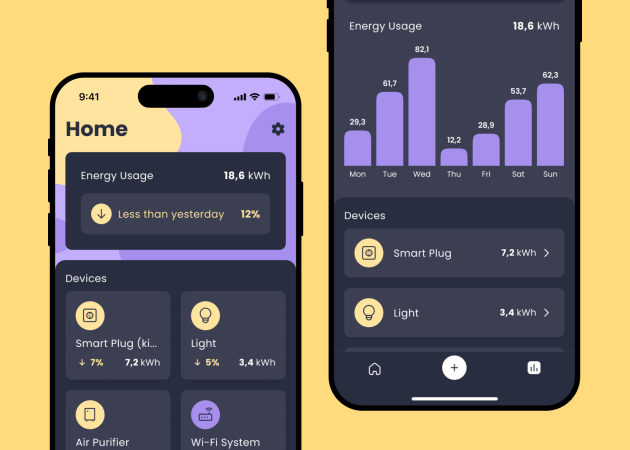
Take a look at some of our work across energy, GreenTech, connected infrastructure, and custom software.


What Our Clients Have To Say About Working With Us
Clients come to us from all kinds of industries, with work that runs from custom software and data through cloud, AI, and long-term partnerships. Their words offer an honest read on what a partnership with us involves.

Let's Talk Through Your Energy Management Project
Share where your energy software or data is holding you back, and we will get back to you to talk through what a custom build, integration, or modernization could look like.

FAQs
Common questions about custom energy management system development, integration, and how these projects work.