Node.js Development Services
Grow your business with a scalable Node.js application. We empower you to innovate faster with a complete Node.js development service offering. It covers custom applications, consulting, and team training.
-

Top 1% of global
Software Service providers -

ISO 27001 certification
by Bureau Veritas
-

GDPR-Compliant processes
for responsible data protection -

AWS trusted infrastructure
for scalable solutions -

Bureau Veritas —
an independent global leader in testing, inspection, and certification.
How Node.js Can Address Modern Business Challenges
If your team is dealing with slow delivery or limited engineering capacity, Node.js development may provide a practical foundation for certain applications. Its event-driven architecture, JavaScript ecosystem, and support for shared frontend and backend skills can simplify development when they fit the workload and product architecture:
-
Tap into the benefits of Node.js
-
Performance for I/O-heavy applications
Node.js uses non-blocking I/O to handle requests without waiting for each operation to finish before starting the next. This makes it well suited to APIs, data-intensive services, and applications with frequent network or database activity.
-
Scalability for growing workloads
Its asynchronous model can support many concurrent connections, particularly for I/O-bound workloads. Horizontal scaling still depends on application architecture, infrastructure, database performance, and suitable workload distribution.
-
Unified JavaScript development
Node.js allows teams to use JavaScript or TypeScript across frontend and backend development. A shared language can simplify collaboration and reduce context switching, although the overall maintenance effort still depends on architecture and code quality.
-
Potential cost efficiency
Reusable libraries, shared skills, and an efficient runtime can reduce development or infrastructure overhead in suitable use cases. Actual savings depend on the workload, hosting model, team structure, and long-term maintenance requirements.
-
Broad ecosystem and community support
The npm ecosystem provides packages for common integrations, authentication, testing, data access, and other development needs. Established modules can reduce custom work, but dependencies still need to be assessed for security, maintenance, licensing, and compatibility.
-
Real-time and event-driven applications
Node.js is a strong option for chat tools, collaborative applications, notifications, live dashboards, and other systems that maintain frequent connections. WebSocket support and event-driven processing make it suitable for these workloads, while media-heavy streaming may require additional specialized infrastructure.
Our Node.js Development Services
If you need responsive web applications, APIs, or event-driven backend services, Node.js may be a strong fit. Beetroot’s Node.js development services help turn product requirements into maintainable software shaped around your users, workload, and existing technology environment.
-

Node.js App Development
Build custom web applications, APIs, and microservices with Node.js. We shape the application architecture around your business requirements, expected workloads, integrations, and long-term maintenance needs, with appropriate attention to security and performance.
-
Real-Time Application Development
- Build interactive applications with WebSockets, Socket.IO, and Node.js’s event-driven architecture. This approach is well suited to chat applications, live dashboards, collaborative tools, notifications, and IoT backends that need frequent data updates and responsive communication.
-
API Development & Integration
Design REST APIs and GraphQL endpoints that connect applications, data sources, and external services. Depending on the scope, the work can include third-party integrations, authentication, rate limiting, validation, and API documentation.
-
Microservices Architecture & Modernization
Where the product and team are ready for distributed architecture, we can separate suitable parts of a monolith into independently deployable services using Node.js, containers, and orchestration tools. A carefully scoped transition can improve release independence and scalability.
-
Node.js Consulting Services & Performance Optimization
Review application performance, architecture, and resource use to identify practical improvements. Depending on the bottleneck, the work may cover database queries, memory usage, caching, load distribution, event-loop behavior, or infrastructure configuration.
-
Legacy System Modernization
Modernize selected parts of a legacy system through gradual refactoring, API development, dependency upgrades, or migration to a suitable Node.js architecture. The approach is planned around business continuity, critical data, integration dependencies, and realistic rollback requirements.
-
Node.js Training
Strengthen your team’s Node.js skills through practical workshops adapted to its current experience and codebase. Topics may include backend architecture, asynchronous programming, testing, API development, performance, or maintainable delivery practices.
-
DevOps & Deployment Solutions
- Set up CI/CD pipelines, containerization, and cloud deployment practices around the needs of a Node.js application. Delivery automation, environment controls, and release checks can make deployments more repeatable and help teams identify problems earlier.
-
Have a Node.js product, migration, or performance challenge to discuss?
Cooperation Models
We offer flexible engagement models tailored to your goals, so you get the right level of support at every stage.
-
Dedicated Development Teams
Direct communication and controlPartner with a curated team of Node.js specialists to augment your internal development capacity. Our dedicated teams work exclusively on your projects, bringing domain expertise and a long-term commitment to your product’s success. This model offers maximum flexibility, direct team management, and the ability to scale resources as your project demands change.
-
Project-Based Engagements
Clear scope and deliverablesWe ensure smooth delivery of your Node.js project from initial concept through deployment and maintenance. This model suits businesses that want end-to-end development with full ownership of the project lifecycle on our side. You get transparent milestones, regular progress updates, and delivery within the agreed timeframe so that you can focus on your core business.
-
Custom Tech Workshops
Skill enhancementInvest in your team’s growth with custom workshops built around your technology stack, skill gaps, and business goals. Each session incorporates real-world scenarios and the specific challenges your team faces daily. Tailored to your team’s experience level, these hands-on sessions include practical exercises for lasting knowledge transfer and immediate application.
Not sure which model fits your needs?
Technologies and Tools We Use
We select our Node.js stack based on the application architecture, workload, integrations, and deployment environment. Depending on the project’s performance, scalability, security, and maintenance requirements, that stack may combine backend frameworks, databases and data tooling, container platforms, and cloud services.
-
Runtime, Backend & Full-Stack Frameworks
- Node.js
- Express.js
- NestJS
- Next.js
-
Databases & Data Access
- PostgreSQL
- MongoDB
- MySQL
- Prisma
-
Containers & Orchestration
- Docker
- Kubernetes
-
Cloud Platforms
- AWS
- Microsoft Azure
Is Node.js the Right Fit for Your Project?
The technology stack can influence development speed, operating complexity, and long-term maintainability, but no single runtime fits every application. Node.js is often a practical option for event-driven systems, I/O-heavy workloads, and teams with strong JavaScript expertise. Consider the following scenarios when evaluating it for your project:
-
Do you need real-time features or highly interactive experiences?
Node.js is well suited to chat applications, live dashboards, notifications, collaborative tools, and other products that require frequent data exchange. Its event-driven architecture and WebSocket support make it a practical option for maintaining many active connections. Media streaming itself may still require dedicated delivery and processing infrastructure.
-
Does your team already work extensively with JavaScript or TypeScript?
Using Node.js on the backend can give frontend and backend engineers a shared language, which may reduce context switching and simplify collaboration. Some validation logic, types, and utility code may also be shared, although browser and server environments still require separate architecture and security considerations.
-
Are you building independently deployable services or handling many concurrent connections?
Node.js can work well for lightweight APIs, microservices, serverless functions, and distributed systems with I/O-heavy workloads. Whether it is the right choice depends on service boundaries, infrastructure, observability, data consistency, and the team’s ability to operate a distributed architecture.
-
Are low latency and high throughput important for your application?
Node.js can efficiently handle workloads that spend substantial time waiting for databases, APIs, files, or network responses. Performance still depends on application design, database behavior, infrastructure, and workload patterns. CPU-intensive processing may require worker threads, separate services, or another technology.
Not sure whether Node.js fits your workload and architecture?
Meet Your Team
Our Node.js development team brings together skilled engineers who together offer a broad range of experience and expertise. With Beetroot, you can find the right fit for the job, whether you need a versatile developer for a new feature or a seasoned architect to guide your most complex initiatives.







Our Node.js Development Process
Our approach emphasizes transparency, iterative progress, and close coordination with your team. We adapt the process to the application, existing technical environment, delivery model, and expected workload, with performance and maintainability considered throughout development.
-
Requirements Gathering
Step 1We start by understanding your product vision, business goals, users, and technical environment. Together, we outline the initial scope, priorities, constraints, risks, and delivery expectations. Where relevant, we also agree on measurable success criteria to keep technical decisions aligned with the project goals.
-
Architecture & Design
Step 2We translate the agreed requirements into a suitable technical direction. Depending on the project, this may include application architecture, database design, APIs, integrations, and infrastructure considerations.
-
Environment Setup
Step 3We prepare the environments and delivery tooling required for the project. This may include development, staging, and production environments, CI/CD pipelines, automated testing, containerization, cloud infrastructure, and monitoring.
-
Development & Iteration
Step 4Our engineers develop the Node.js application in manageable increments, with regular reviews and feedback. The delivery cadence and working practices are adapted to your team, project scope, and cooperation model.
-
QA & Testing
Step 5Testing takes place throughout development and before release. Based on the agreed quality requirements, the team may assess functionality, integrations, performance, security, compatibility, and regression risks.
-
Deployment & Launch
Step 6Once the agreed release criteria are met, we support deployment to the selected hosting environment. The release approach may include staged deployment, migration planning, validation, and rollback procedures where the application’s risk profile requires them.
-
Maintenance & Support
Step 7Post-launch monitoring, maintenance, and further development can be provided through an agreed support setup. Depending on your needs, this may include dependency and security updates, performance improvements, troubleshooting, knowledge transfer, and new feature development.
Why Work with Beetroot for Node.js Development
Looking for the right Node.js development company for your needs? Beetroot combines Node.js engineering expertise with a people-centered approach to collaboration. Our developers, architects, and consultants bring different technical perspectives to each project while working toward solutions that fit your product, team, and long-term priorities.
-
Full-Stack Engineering Expertise
Depending on your needs, Beetroot can support frontend development, backend architecture, mobile applications, cloud infrastructure, and DevOps. Bringing these capabilities together can simplify coordination across the technology stack, with responsibilities shaped around the agreed project scope.
-
Security-Aware Development
Beetroot is ISO 27001 certified by Bureau Veritas. Security practices are selected according to the application architecture, data sensitivity, and risk profile and may include threat modeling, access controls, dependency checks, secure coding, and security testing.
-
Environmental Responsibility
Sustainability is part of Beetroot’s wider approach to technology and business. Where relevant to the project, we can consider efficient code, resource-aware architecture, and right-sized cloud infrastructure. The applicable practices depend on the workload, hosting environment, and product requirements.
-
Ongoing Support Options
Maintenance, monitoring, performance improvements, and further feature development can be included through an agreed post-launch setup. The format and level of support depend on your application, internal capabilities, and cooperation model.
-
Global Perspective
Our internationally distributed team brings together diverse perspectives, cultural insights, and specialized expertise from multiple markets. This diversity drives innovation, enhances problem-solving capabilities, and ensures your solutions are designed with international scalability and cross-cultural usability in mind.
-
Rapid Time-to-Market
Beetroot’s distributed engineering community brings together people with varied technical and market experience. This can contribute additional perspectives to product development and collaboration, while the exact team composition is matched to the skills and availability required for the project.
Client Testimonials
Learn why our clients rely on our technical expertise to achieve their business goals.

Beetroot in Action
We’ve delivered successful projects for a variety of clients, from startups to established enterprises. Here are a few examples of the impact we’ve made:

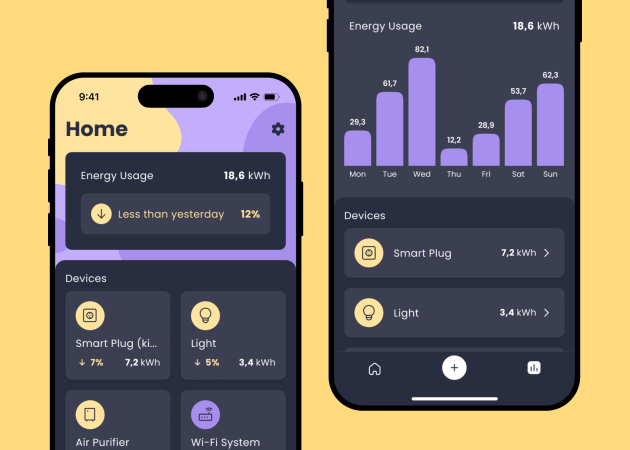

Custom Node.js Workshops for Teams
Our custom workshops help in-house development teams address specific Node.js knowledge gaps through practical, project-relevant training. Sessions can be adapted to your team’s experience, technology stack, and current engineering challenges, with exercises and examples drawn from real development scenarios.
-
Current Node.js Practices
Explore relevant Node.js features, supported versions, development patterns, and practices suited to your applications.
-
Performance and Scalability
Build practical skills in profiling, debugging, memory management, and identifying performance bottlenecks in Node.js applications.
-
Microservices and API Design
Strengthen your team’s understanding of designing, developing, testing, and deploying Node.js APIs and distributed services, including the operational trade-offs involved.
Let's explore how our expertise can solve your challenges:
Share a few details about your project, and our Node.js specialists will connect with you for a consultation.

FAQs
Answers to common questions about Node.js development and where it fits best.