Hire Computer Vision Engineers To Turn Visual AI Into Production Systems
Build products and operations that use images, video, and visual sensor data under real-world conditions. Beetroot can help you access computer vision expertise across data preparation, model development, deployment, and integration.
-

Top 1% of global
Software Service providers -

ISO 27001 certification
by Bureau Veritas
-

GDPR-Compliant processes
for responsible data protection -

AWS trusted infrastructure
for scalable solutions -

Bureau Veritas —
an independent global leader in testing, inspection, and certification.
Computer Vision Expertise for Your Project
Depending on the scope, Beetroot can connect you with engineers who bring relevant experience in visual data pipelines, model development, and production deployment.



When Do You Need to Hire Computer Vision Engineers?
Companies need computer vision engineers when visual data becomes part of a product, workflow, or decision-making process. These specialists build systems that help software interpret images, videos, camera feeds, sensor data, and scanned documents.
-
You need to automate visual inspection, detection, or monitoring that people handle manually today. Our engineers design the models and pipelines for image and video analysis, defect detection, object recognition, and consistent visual quality checks.
-
Your model performs well in testing but needs to hold up against real-world lighting, angles, and variable input. Our engineers improve robustness through better data, careful validation, and systematic testing against difficult edge cases.
-
You have image or video data and no clear route from raw files to production use. They build the data preparation, annotation, and deployment pipeline that connects your raw data to a production workflow.
-
You need visual AI integrated into an existing product, device, or workflow. They handle model deployment and integration so the new capability fits your architecture and operating environment.
-
Recognize your situation?
What Our Computer Vision Engineers Specialize In
Computer vision development goes well beyond training a model on images. A strong computer vision software engineer understands visual data pipelines, annotation, model architecture, evaluation, deployment, optimization, and integration with real products or operations.
-
Image Classification and Recognition
Classify visual input or recognize known patterns across large volumes of images. This supports workflows from content tagging to automated sorting, with model accuracy tuned to your specific data and use case.
-
Object Detection and Tracking
Detect, localize, and track objects across frames, including real-time and near-real-time analysis. This supports workflows like item counting, movement tracking, and monitoring people or vehicles across complex scenes, along with performance evaluation.
-
Image Segmentation and Pixel-Level Analysis
Analyze images at the pixel level for segmentation, boundary detection, and precise measurement. This high-precision work matters most where exact shape, area, or position directly drives the decision your system has to make.
-
Video Analytics and Visual Monitoring
Process video streams for event detection, movement analysis, safety monitoring, and operational visibility. This turns hours of continuous footage into structured signals that your systems and your teams can actually act on.
-
Data Preparation, Annotation, and Model Evaluation
Enhance dataset quality with annotation workflows, preprocessing, and augmentation. Measure accuracy, false positives, false negatives, and edge cases for a robust evaluation of system performance.
-
Model Optimization and Production Deployment
Prepare models for edge or cloud deployment via APIs and MLOps, focusing on latency, model size, and resource constraints. Monitoring and retraining workflows help teams respond to performance changes as conditions evolve.
Find the right computer vision expertise for your use case:
Computer Vision Use Cases for Products and Operations
Computer vision engineers are most valuable when visual data needs to be processed, interpreted, and integrated into products or operational workflows. For broader end-to-end delivery, explore Beetroot’s computer vision services.
-
Quality Inspection and Defect Detection
Automate visual quality control across manufacturing, industrial operations, and hardware production. Computer vision engineers build detection pipelines designed to flag defects at the required line speed, with performance validated against real production conditions.
-
Medical and HealthTech Image Analysis
Support medical imaging, diagnostic-assistance, and healthcare visual-data workflows with carefully validated models. Where outputs may inform clinical decisions, the system needs appropriate clinical validation and human review.
-
Video Analytics and Safety Monitoring
Analyze video in real time or in batches for operational visibility, security support, traffic monitoring, and workplace safety. This gives teams earlier signals and a clearer picture of what is happening across sites and infrastructure.
-
Retail and E-commerce Visual Search
Power product recognition, visual recommendations, inventory analysis, and shelf monitoring. Computer vision engineers connect visual search to your catalog and daily operations so customers and internal teams can find relevant products more easily.
-
Geospatial, Drone, and Environmental Imagery
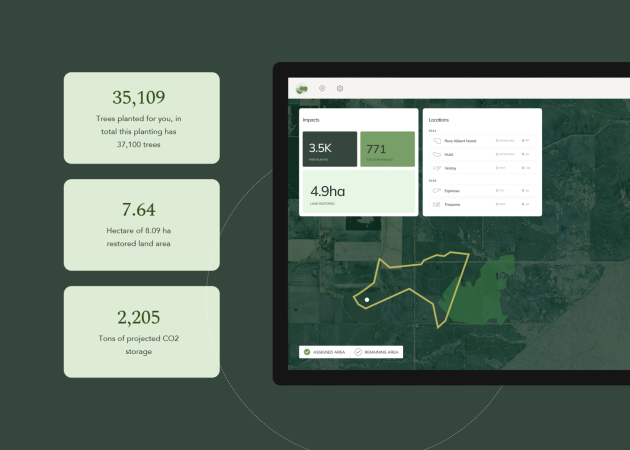
Analyze satellite, aerial, and drone imagery for land monitoring, infrastructure inspection, and environmental insight. This work supports GreenTech and operations teams that depend on reliable data across wide or hard-to-reach areas.
-
OCR and Document Image Processing
Extract text from scanned documents, forms, and IDs, turning visual documents into structured, usable data. This streamlines document-heavy business processes that would otherwise rely on slow, error-prone manual data entry.
What does it cost to hire a computer vision engineer?
The cost to hire a computer vision engineer depends on the engineer’s seniority, cooperation duration, project complexity, data availability, annotation needs, model complexity, deployment environment, accuracy requirements, integrations, security needs, and whether you need a single specialist or a broader team.
Longer commitments and clearly defined scopes generally help optimize rates, while urgent or highly specialized computer vision work may call for a more senior setup.
-
Entry-level and supporting engineers start at $276 per day, or approximately $5,250 per month for short-to-mid-term engagements.
-
Mid-level positions start at $411 per day, or approximately $7,800 per month for short-to-mid-term projects.
Our Cooperation Models
Beetroot supports different engagement models depending on your project maturity, internal capacity, and delivery goals. Whether you need embedded specialists, a scoped delivery with clear milestones, or broader engineering capacity, we can align cooperation with your current goals and help you hire software developers for adjacent areas of expertise when needed.
-
Dedicated Development Teams
Best for long-term partnershipOne or more computer vision engineers join your delivery process for an extended period. Depending on the scope, they can support ongoing development, optimization, and production work while building continuity around the domain.
-
Project-Based Delivery
Suited to specific, time-bound goalsA defined engagement with clear scope: building a detection pipeline, preparing and annotating data, or deploying and integrating a model. Suited to specific technical milestones with a set end date and clearly defined output.
-
Custom AI Workshops
Best for advanced AI skill developmentStructured sessions for teams building internal visual AI capability, covering data strategy, model evaluation, deployment considerations, and production realities. Learn more about custom tech workshops designed for in-house technical teams.
Not sure where to start? Tell us about your current stage and what you want to achieve:
How the Hiring Process Works
Successful computer vision hiring starts with understanding your visual data, model requirements, deployment environment, integrations, and team setup. Beetroot’s process is structured, transparent, and focused on long-term fit.
-
Scope and Data Environment Review
Step 1We clarify what you want to build, what visual data is available, what conditions the model must handle, and what accuracy expectations apply. This shapes the technical profile and helps you avoid over- or under-specifying the role from the start.
-
Technical Screening and Profile Matching
Step 2We evaluate relevant skills: computer vision model development, Python, PyTorch or TensorFlow, OpenCV, object detection, segmentation, video analytics, annotation, deployment, and MLOps. Communication and collaboration fit are assessed alongside technical depth.
-
Client Review and Developer Selection
Step 3You review shortlisted profiles and talk directly with the engineers to confirm their skills, communication style, and realistic project expectations before making any commitments on either side of the engagement.
-
Onboarding and Collaboration Setup
Step 4Once the right engineer is selected, we help them get fully up to speed on your visual datasets, annotation standards, model pipeline, and deployment environment. We also agree early on what documentation and knowledge transfer you’ll need, so the engineer’s work fits how your team maintains the system over time.
ML Engineer vs. CV Engineer: Choosing the Right Specialist
Computer vision and machine learning often overlap, and the right cooperation route — direct hire, computer vision engineer staffing, or a tech partner — depends on the type of data, system requirements, and production context. A general ML engineer often fits broader prediction and data-modeling tasks, while visual data at the center of a product usually calls for dedicated computer vision expertise.
ML Engineer
Broader ML tasks, structured or tabular data, predictive analytics, recommendations, NLP, or general model workflows.
Computer Vision Engineer
Image and video data, detection, segmentation, tracking, OCR, visual inspection, real-time monitoring, or camera-based systems.
ML Engineer
Data modeling, feature engineering, model training, evaluation, and ML pipelines.
Computer Vision Engineer
Visual data preprocessing, annotation workflows, image and video models, and model robustness.
ML Engineer
Model monitoring, data drift, integration, and MLOps.
Computer Vision Engineer
Lighting, camera angle, image quality, latency, edge or cloud deployment, and false positives or negatives under real conditions.
Beetroot helps you identify whether you need a general ML engineer, a dedicated computer vision specialist, or broader AI development support. We match the role to your problem, data, and production environment, and can combine both where a product needs it.
Not sure which specialist your project needs? Let's work it out together.
Why build your computer vision team with Beetroot?
Beetroot combines AI and ML engineering capability with full software delivery discipline, flexible cooperation models, and a grounded approach to production-ready visual AI systems.
-
Specialized Computer Vision Engineering Capability
Beetroot matches you with engineers experienced across the full path: visual data, model development and evaluation, deployment, and production integration.
-
Full Software Delivery Discipline
Cover the full stack beyond the model layer: backend and platform engineering, cloud, DevOps and MLOps, QA, security-aware delivery, and long-term maintainability.
-
Flexible Cooperation Models
Choose dedicated teams, project-based delivery, or custom AI workshops, matched closely to your project maturity, internal capacity, and goals as they evolve over time.
-
Production and Governance Mindset
Depending on the system and how it operates, production work can span monitoring, testing, data access controls, model-performance tracking, and practical risk controls.
-
Knowledge Transfer and Team Enablement
Where knowledge transfer is part of the engagement, engineers document key decisions, share working practices, and support your team in taking ownership.
-
Experience Across Data-Heavy Domains
We support data-heavy domains with cross-functional engineering expertise, from complex data work through to production integration and post-launch maintenance.
What Our Clients Say
The best way to understand our value is through our clients’ achievements. Take a closer look at their stories.

Featured Cases
Partnering with a range of clients for over 12 years, we’ve delivered a wide spectrum of solutions. Here’s a closer look at some of them.


Tell us about your computer vision project:
Give us a quick picture of your visual data, accuracy targets, and deployment setup, and we’ll help you figure out the right approach.

FAQs
Common questions about what matters when you’re hiring computer vision engineers to build production visual AI.