Chatbot Testing & QA Services
Validate your chatbot’s performance, accuracy, and user experience before it reaches customers. Our approach combines functional chatbot testing, NLP evaluation, and load validation to assess conversation quality, compliance readiness, and reliability across selected channels.
Why Is AI Chatbot Quality Assurance Important?
Poor NLP accuracy, inconsistent tone, slow responses under load, and accessibility gaps can erode trust and drive users away. Chatbot QA helps surface these issues by checking performance, conversation flows, and whether responses follow agreed business and brand requirements.
-
Misunderstood queries frustrate users
NLP testing and NLU accuracy checks reveal weak intent recognition and unnecessary fallbacks, helping your team make conversations more relevant.
-
Off-brand or inconsistent replies weaken trust
Conversation UX testing identifies issues with tone, style, and phrasing so responses can be brought closer to your brand voice.
-
Latency spikes harm engagement
Load testing for chatbots measures latency and throughput under expected peak demand, helping teams identify performance bottlenecks before release.
-
Accessibility issues exclude users
Accessibility testing checks against agreed criteria, such as screen-reader compatibility and keyboard navigation, to identify barriers for users with different access needs.
-
Unclear escalation paths leave users stuck
Fallback and escalation testing checks whether unresolved or sensitive requests reach the right human team with enough context.
-
Bias in AI responses creates reputational risk
Bias detection examines representative inputs and chatbot outputs for uneven or harmful patterns, giving teams evidence for targeted improvements.
-
Identify chatbot quality gaps before they affect users
Our AI Chatbot Testing Services
Our chatbot testing services help identify issues that can affect performance, brand consistency, accessibility, and user trust before and after launch. The scope can combine relevant testing areas based on your chatbot architecture, users, and release stage.
-

Functional & NLP/NLU Testing
Run functional checks alongside NLP/NLU evaluations using real and synthetic queries. Intent recognition testing, entity extraction, and multi-turn conversation testing assess whether responses remain accurate, context-aware, and aligned with intended user journeys.
-
Conversation Flow & UX Testing
Simulate realistic user journeys across channels to uncover broken paths, unclear prompts, and off-brand language. The findings help your team refine conversation flows and make routes to resolution clearer and more consistent.
-
Performance & Load Testing
Apply load testing for chatbots to measure latency, throughput, stability, and resource use under expected peak demand. Test results reveal bottlenecks and capacity limits, informing performance improvements before launch or scaling.
-
Compliance Readiness Checks
Our consultants examine data flows, consent, logging, retention, access controls, and model behavior against internal policies and relevant regulatory requirements. We provide documented findings, recommendations, and test evidence to support your compliance review.
-
Accessibility Testing
Assess accessibility through screen-reader checks, keyboard navigation, and testing against relevant WCAG criteria. The review identifies barriers and provides practical recommendations for improving access across agreed user journeys.
-
Localization & Multilingual Testing
Test translations, locale detection, and NLU accuracy across agreed languages and regions. Checks cover tone, cultural context, and intent handling, with native-language or domain review included where required.
Plan a testing scope around your chatbot’s current risks and release stage
Chatbot Assurance vs. Broader AI Testing
Chatbot QA is a specialized form of AI and software testing. Alongside model quality, it examines how the system maintains context across turns, guides users through conversations, handles fallbacks and escalation, and performs across channels and integrations.
-
Chatbot QA
- Places particular emphasis on conversation flow, context retention, tone, and brand alignment across multi-turn interactions
- Tests intent recognition, entity extraction, NLU accuracy, fallback behavior, and handling of ambiguous queries
- Reviews prompt clarity, conversation paths, human handover, accessibility, and consistency across supported channels
- Measures response latency, concurrency, and stability under expected conversation volumes
- Examines conversational outputs for harmful, misleading, biased, or off-brand responses
- Checks connections to channels, knowledge sources, CRMs, APIs, and escalation workflows
-
Broader AI System Testing
- Evaluates model and system behavior against criteria defined for the wider AI use case
- Tests task accuracy, robustness, calibration, dataset quality, and other model-specific metrics
- Reviews how users or downstream systems interact with the AI application, where relevant to the scope
- Measures inference latency, throughput, resource use, and scalability under expected workloads
- Examines bias, safety risks, and failure modes relevant to the model, data, and application
- Checks APIs, data pipelines, integrations, and interoperability across the wider system
Define a QA scope around the risks specific to conversational AI
Our AI Chatbot QA Process
Our six-stage chatbot QA process draws on Beetroot’s manual, automation, regression, accessibility, and performance testing practices. The scope, test criteria, and reporting are agreed with your team, so stakeholders can see what is being tested and how findings are assessed.
-
Discovery & Requirements Analysis
Step 1Our QA experts clarify chatbot objectives, target platforms, and compliance considerations. They review business logic, conversation flows, and integrations to define a test strategy aligned with the project’s technical and user experience goals.
-
Test Planning & Environment Setup
Step 2Engineers design targeted test cases covering functional checks, NLP/NLU accuracy, and performance benchmarks. A controlled environment is configured to reflect relevant production conditions, including agreed devices, browsers, networks, and third-party connectors, so compatibility and configuration issues can be identified early.
-
Manual & Automation Script Development
Step 3QA professionals craft manual test cases for exploratory and edge-case validation. In parallel, automation engineers build reusable scripts for regression testing across intent recognition, flow continuity, and integrations.
-
Execution & Regression Testing
Step 4The testing team runs planned manual and automated scenarios, including multi-turn conversations, fallback handling, and load testing. Automated regression suites check whether updates have disrupted existing functionality or introduced defects in covered scenarios.
-
Defect Reporting & Retesting
Step 5Defects are logged in detail with reproduction steps, screenshots, and analytics context. Once fixes are deployed, testers verify the affected scenarios and check for related regressions, feeding the results into the next improvement cycle.
-
Performance Validation & Recommendations
Step 6Performance specialists simulate expected traffic levels and concurrent sessions to evaluate chatbot stability, latency, and throughput. Test results highlight bottlenecks and support targeted recommendations to improve scalability, reliability, and response time.
Example Tools for Chatbot Testing and QA
The testing stack depends on your chatbot architecture, supported channels, data requirements, and QA scope. Depending on the project, our teams may use tools from the following areas alongside your existing testing and delivery environment.
-
Test Planning & Defect Tracking
- TestRail
- Zephyr
- Jira
- Bugzilla
-
Functional & Regression Automation
- Selenium
- Cypress
- Appium
- Katalon Studio
-
API & Integration Testing
- Postman
- Newman
- Swagger
- Rest Assured
-
Performance, Load & Observability
- JMeter
- Gatling
- Kubernetes
- Splunk
-
CI/CD & Test Environments
- Jenkins
- GitLab CI/CD
- Docker
- Firebase Test Lab
-
Accessibility & Mobile Compatibility
- VoiceOver
- TalkBack
- Android Studio
- Xcode
Cooperation Models for Your Chatbot QA Project
Choose a cooperation model that fits your QA scope, internal capacity, and timeline. Each option can be tailored to your chatbot, team setup, and level of support needed.
-
Dedicated Development Teams
Long-term cooperationAdd a stable team of QA engineers and automation specialists to support ongoing chatbot releases. You set priorities and remain in control of the roadmap, while Beetroot supports recruitment, team care, and long-term continuity.
-
Project-Based Solutions
Defined scope and milestonesUse project-based delivery for a concrete QA objective, such as launch readiness, NLU migration, regression automation, or a compliance readiness review. We align on the scope, test criteria, milestones, and handover approach before execution.
-
Team Workshops
Practical skill-buildingChoose a custom workshop when your team needs focused guidance on a current chatbot QA challenge or an upcoming project calls for specific skills. We’ll help identify knowledge gaps and design practical sessions to overcome them.
Not sure which cooperation model fits your chatbot QA needs?
Why Beetroot for Chatbot Quality Assurance?
Beetroot brings together QA, AI, accessibility, and software engineering expertise to support chatbot testing at different stages of development. We adapt the scope to your product, technical environment, and internal capacity.
-
Responsible, Accessibility-Aware Testing
Our QA approach includes accessibility, usability, and responsible AI considerations where relevant to the scope. Testing can cover screen-reader compatibility, keyboard navigation, harmful output patterns, and other risks that may affect different user groups.
-
Chatbot QA and Automation Expertise
Our teams combine manual testing, automation, NLP/NLU evaluation, integration checks, and performance testing. The testing approach is shaped around your chatbot architecture, supported channels, and release priorities.
-
Relevant Industry Experience
Beetroot works with clients across HealthTech, GreenTech, FinTech, EdTech, and other technology sectors. This experience helps our teams account for domain-specific workflows, privacy expectations, accessibility needs, and internal review processes.
-
Technology-Agnostic Approach
We select tools and testing methods based on your existing stack and project requirements rather than pushing a fixed platform. This makes it easier to work with your current models, integrations, infrastructure, and delivery processes.
-
Flexible, Ongoing Support
Choose a defined QA project, a dedicated team, or targeted workshops based on your current needs. Support can also continue across releases through regression testing, monitoring, and planned quality improvements.
-
Clear Reporting and Knowledge Transfer
We document test coverage, defects, risks, and recommended next steps in a format your technical and product teams can use. Where needed, we also share reusable test assets and practical guidance to support future releases.
Featured Cases
These selected projects reflect Beetroot’s broader experience in custom software development, AI and ML, product design, and long-term engineering support across different industries.

AI Chatbot Testing Across Industries
Chatbots face different quality, privacy, accessibility, and performance requirements depending on their industry and use case. We adapt the QA scope to your workflows, integrations, users, and risk level, including voice assistants and hybrid chatbots where relevant.
-
HealthTech
AI bot testing in healthcare can cover responses against approved content, data-handling controls, escalation paths, accessibility, and multilingual use. Where medical information is involved, the validation process should include qualified clinical reviewers on the client
-
GreenTech
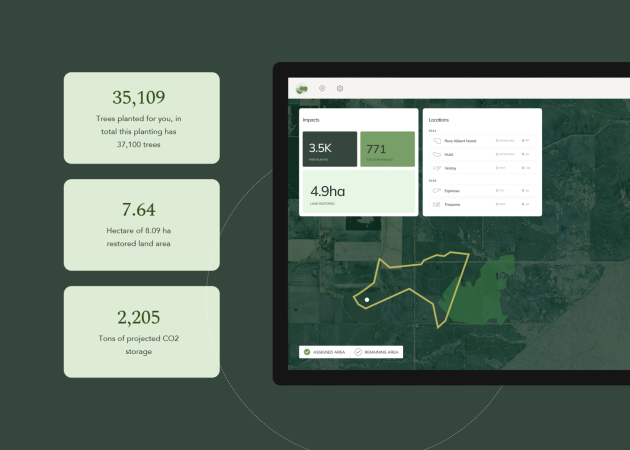
Bot testing automation can help GreenTech teams repeat checks for data presentation, IoT alerts, and workflows connected to environmental systems. Testing can also cover source freshness, integration failures, and domain-specific reporting requirements.
-
FinTech
Financial chatbots require careful testing of identity flows, transaction guidance, fraud-related alerts, and integrations with banking systems. Where payment data is involved, QA can assess relevant controls and support PCI DSS readiness without replacing formal compliance review
-
EdTech
Chatbot testing for EdTech platforms can cover lesson navigation, multilingual feedback, accessibility, and LMS integrations. It can also flag responses that need clearer boundaries, age-appropriate wording, or human review.
-
E-Commerce & Retail
Retail chatbot testing can check product and stock data, order flows, recommendations, and ERP or CRM integrations. Conversation and performance tests help surface inconsistent responses and broken paths across supported channels.
-
Logistics & Mobility
For logistics and mobility products, QA can cover route updates, proof-of-delivery queries, shipment tracking, and connections to WMS or telematics systems. Performance testing measures responsiveness under expected traffic and identifies integration or capacity issues.
Not seeing your industry? We've likely worked on something close
Chatbot QA Specialists for Your Project
Work with QA engineers and test automation specialists selected around your chatbot architecture, testing scope, and team setup. They can support functional testing, regression automation, NLP/NLU evaluation, and performance checks as part of a dedicated team or defined QA project.



Client Testimonials
Our clients work with Beetroot across a range of software, AI, and team-extension projects. Here is what some of them say about the cooperation, communication, and work delivered.

Custom Chatbot QA Workshops
Tailored 1–3 day workshops help product, engineering, and QA teams strengthen their approach to chatbot testing. Delivered online or on-site, sessions can use examples from your stack, test environment, or current QA challenges.
-
Strengthen practical testing skills
Learn approaches to functional, regression, and performance testing using tools relevant to your chatbot and delivery setup.
-
Improve conversation-quality evaluation
Practice NLU assessment, conversation-flow testing, and accessibility checks across representative scenarios.
-
Build repeatable QA practices
Develop reusable test cases, automation patterns, and CI-ready assets that your team can adapt for future releases.
Ready to assess your chatbot’s quality?
Share a few details about your project, and our team will get back to you shortly to discuss how we can help.

FAQs
Here are answers to some of the most common questions about chatbot testing and QA. Contact our team directly for guidance on your specific setup.