Multimodal AI Development Services
- Real-Time Context
- Coordinated Systems
- Security-First
Bring text, images, audio, video, and sensor data into one connected AI system. Our multimodal AI specialists work alongside your team to shape practical solutions around your product, data, and operating environment.
-

Top 1% of global
Software Service providers -

ISO 27001 certification
by Bureau Veritas
-

GDPR-Compliant processes
for responsible data protection -

AWS trusted infrastructure
for scalable solutions -

Bureau Veritas —
an independent global leader in testing, inspection, and certification.
Why Multimodal AI Matters for Modern Businesses
Many organizations already collect customer conversations, sensor readings, images, video, and documents, but these sources often sit in separate systems. A multi-modal AI approach can bring several types of input into one workflow, giving teams richer context for decisions, automation, and user experiences.
-
Enhance decision‑making through data fusion
Combining visual, textual, audio, and sensor data can reveal patterns that single-source analysis may miss. This can support better-informed decisions in areas such as diagnostics, finance, and industrial monitoring.
-
Improve user interaction with human‑like understanding
Systems that interpret voice, images, and gestures together can support more natural assistants, customer-service tools, and immersive experiences.
-
Build real-time context into operations
Processing cameras, microphones, GPS, and sensor data together can help systems respond to changing conditions more quickly. Relevant use cases include equipment monitoring, route planning, and safety alerts.
-
Support more relevant personalization
Combining product, content, and behavioral signals can give recommendation systems a fuller view of user needs. The quality of the result still depends on the available data, privacy controls, and the relevance of the signals selected.
-
Could connected data give your team a clearer view?
Multimodal AI Services for Connected Systems
Bringing several data types into one product takes more than choosing a model. Our multimodal AI services cover integration, consulting, custom model development, data engineering, industry-specific use cases, and team training — all shaped around your existing systems and goals.
-
Multimodal AI Integration
Connect text, image, audio, video, and sensor models with the products and workflows your team already uses. We support API integration, cross-modal learning, deployment planning, and performance work around your architecture.
-
Multimodal AI Consulting
Turn a broad idea into a practical roadmap. We help identify promising use cases, assess data and infrastructure readiness, and clarify technical, security, and governance requirements before development begins.
-
Custom Model Development
Build or adapt a custom multimodal AI model around your data, constraints, and target use case. Depending on the need, the work may include multimodal transformers, fusion architectures, fine-tuning, and evaluation against agreed criteria.
-
Industry-Specific Solutions
Shape multimodal AI applications around sector-specific workflows, data standards, and risk levels. Relevant domain experience can support discovery and delivery in HealthTech, FinTech, EdTech, GreenTech, and other industries.
-
Custom AI Workshops for Teams
Build practical knowledge through focused, hands-on workshops shaped around your team’s goals and current experience. Sessions combine collaborative exercises with direct instructor feedback and relevant project context.
-
Multimodal Data Processing & Engineering
Prepare varied data sources for training and inference through multimodal data processing, annotation, alignment, and pipeline design. We help establish the data flows and infrastructure needed to keep inputs usable as the system evolves.
Need the right mix of models, data engineering, and integration support?
Cooperation Models
Every project has its own needs. With Beetroot, you can choose how to engage, from dedicated experts who become part of your team to full project delivery or practical workshops for upskilling. Our wider specialist network gives you room to adjust the team as priorities change, based on the expertise and availability your project requires.
-
Dedicated Development Teams
Best for long-term commitmentStrengthen your in-house capabilities with dedicated Beetroot engineers and data scientists. Our specialists work within your existing workflows, bringing relevant technical and domain knowledge while you retain ownership of the roadmap. This model suits long-term cooperation and continued product development.
-
Project-Based Engagements
Milestone-driven, scoped deliveryFor projects with a defined outcome, we assemble cross-functional teams to support delivery from discovery through deployment. Whether you’re testing an idea, building a prototype, or adding a new feature, responsibilities, milestones, timelines, and budget expectations are agreed upfront.
-
Custom Tech Workshops
Hands-on training for teamsUpskill your tech team with workshops tailored to its goals and experience level. Led by experienced practitioners and built around hands-on exercises, each session is adapted to your team’s technical context, so participants gain practical skills they can apply in their day-to-day work.
Which cooperation model would best support your next multimodal AI milestone?
Example Tech Stack
We select frameworks, data tools, and infrastructure based on the data modalities involved, your existing environment, and how the system will be deployed.
-
Core Development and AI Frameworks
- Python
- NumPy
- PyTorch
- TensorFlow
- Hugging Face Transformers
-
Multimodal Models and Architectures
- CNNs
- Vision Transformers
- transformer decoders
- audio and sensor models
-
Fusion and Alignment Methods
- Cross-modal attention
- contrastive learning
- co-attention layers
- embedding alignment
-
Data Annotation and Streaming
- Label Studio
- Apache Kafka
-
Cloud and Infrastructure
- AWS
- Google Cloud
- Microsoft Azure
- Docker
- Kubernetes
- Terraform
- Ansible
-
CI/CD and Observability
- GitHub Actions
- GitLab CI/CD
- Prometheus
- Grafana
When to choose a multimodal AI model for your project?
Wondering whether a cross-modal approach fits your idea? Consider a multimodal AI model when your product depends on several types of data working together rather than in isolation.
-
Products that require rich context
Multimodal AI provides fuller context by combining different types of input. It can pair vision and language, for example, a product search that uses both an image and a text query, or analyze video alongside transcribed speech
-
Diverse data sources
Enterprises working with logs, sensor feeds, documents, and images can bring these sources into shared workflows. A coordinated system can surface connections that separate analyses may miss.
-
Human‑centric interfaces
Virtual assistants, chatbots, and robots that interpret voice commands, visual cues, and gestures may benefit from speech recognition, computer vision, and language understanding working together.
-
Real‑time decision environments
Autonomous vehicles, manufacturing lines, and call centers may need to process concurrent audio, video, and sensor inputs quickly enough to support timely decisions, safety checks, and responsive user experiences.
Unsure whether your challenge fits?
Multimodal AI Solutions vs. Text-Focused LLM Applications
Many current LLMs can process more than text, so the distinction is not simply multimodal AI versus LLMs. The practical question is whether your application needs several data types to work together or is primarily centered on language tasks such as conversation, summarization, and document analysis.
-
Multimodal Systems
- Combine text with images, audio, video, or sensor data, depending on the model and architecture
- May interpret or generate several formats and support cross-modal tasks such as visual question answering or text-to-image generation
- Video understanding, visual search, robotics, voice interfaces, medical imaging, and cross-modal analytics
- Often requires preprocessing, data alignment, fusion methods, and infrastructure capable of handling several data types
- Commonly involves greater data, compute, storage, and testing requirements
-
Text-Only LLMs
- Primarily process text and, in some cases, code.
- Primarily generate text-based outputs such as answers, summaries, classifications, or code.
- Chatbots, document analysis, translation, summarization, drafting, and text classification.
- Usually simpler when inputs and outputs remain text-based, although integration, evaluation, and governance are still required.
- Often requires fewer infrastructure resources for focused text use cases, although cost still depends on model size, hosting, and usage.
Meet Your AI Developers
Depending on your project, we assemble a cross-disciplinary team that may include data scientists, computer vision researchers, NLP engineers, speech technologists, and responsible AI specialists. Together, they design, build, and deploy multimodal AI solutions that fit your product and technical environment, combining deep domain knowledge with real development experience.







Industries We Cover
Multimodal AI brings text, images, video, audio, and sensor data into shared workflows. The multimodal AI examples below show where combining these inputs can add useful context to decisions, user experiences, and operational processes in different sectors.
-
FinTech
Financial systems generate structured data like transactions alongside unstructured inputs such as customer chats or market news. Multimodal AI can analyze both at once, supporting fraud analysis, risk modeling, and more context-aware financial services.
-
E-commerce
Customers don’t just read product descriptions — they look at photos, videos, and reviews, and often interact with support chat or voice assistants. Together, these signals can support more relevant recommendations and consistent content across customer touchpoints.
-
HealthTech
Healthcare generates massive amounts of data, from clinical notes and lab results to medical scans and wearable data. Bringing these inputs together can give clinical teams a more complete view — supporting research, patient monitoring, and digital health workflows.
-
GreenTech
Climate and environmental projects often rely on data from models, satellite imagery, sensor networks, and energy systems. Combining these sources can support grid planning, environmental monitoring, and renewable-energy forecasting.
-
EdTech
Multimodal systems can combine speech, visuals, video, and interactive content to support adaptive learning experiences. Relevant applications include personalized tutoring, translation, content assistance, and accessibility features shaped around different learner needs.
-
Manufacturing
Modern factories produce a constant stream of machine sensor data, visual inspections, maintenance logs, and worker input. Multimodal AI can bring these sources together into a single decision-making system, supporting defect detection, predictive-maintenance workflows, and operational recommendations.
Want to explore how multimodal AI could bring value to your industry?
Why Choose Beetroot as Your Multimodal AI Development Company?
Multimodal AI projects ask a lot of a team — model, data, product, and infrastructure expertise all have to work as one. That’s where we come in. Beetroot brings these capabilities under one roof, with flexible teams and support across our machine learning and generative AI services.
-
Work with AI specialists
We build teams with the skills to bring text, images, video, audio, and sensor data into one connected system. Engineers, data scientists, and ML specialists are matched to your use case and technical environment.
-
Move quickly and scale
Many AI projects start with a focused proof of concept and grow as the product matures. As your multimodel AI work expands, the team setup can adjust with it, subject to your priorities and specialist availability.
-
Work across disciplines
Multimodal work often spans computer vision, natural language processing, audio, and data engineering. Beetroot can bring these disciplines into one team, reducing coordination gaps between separate areas of expertise.
-
Rely on long-term team support
AI systems evolve constantly. Our delivery model ensures your team stays cohesive and motivated, with strong collaboration that lasts beyond the first release. That stability is crucial for maintaining and improving your multimodal AI services over time.
-
Tap into a broader ecosystem
Beetroot brings senior AI consultancy, end-to-end development, team extension, and custom workshops together under one roof. As your needs evolve, you can draw on different parts of that mix without starting over with a new partner.
-
Strengthen your impact
We believe AI should be built with more than commercial outcomes in mind. By partnering with Beetroot, you also support the UN Sustainable Development Goals — through investing in local talent, adopting sustainable engineering practices, and applying technology toward broader social good.
Need a team that can bring the right AI disciplines together?
What Our Clients Say
See some of our business partners’ reviews to get an idea of what to expect from our cooperation.

Featured Cases
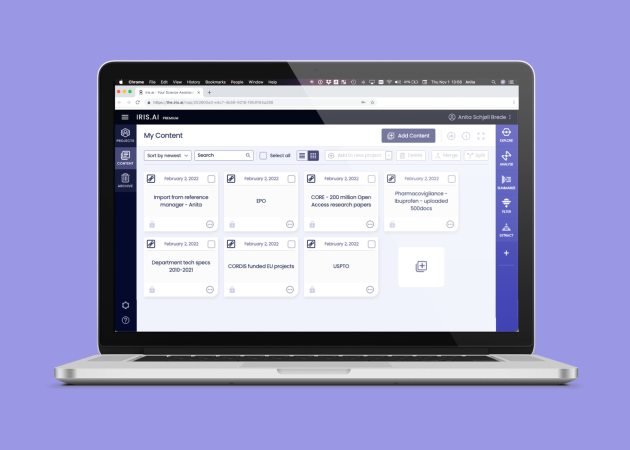
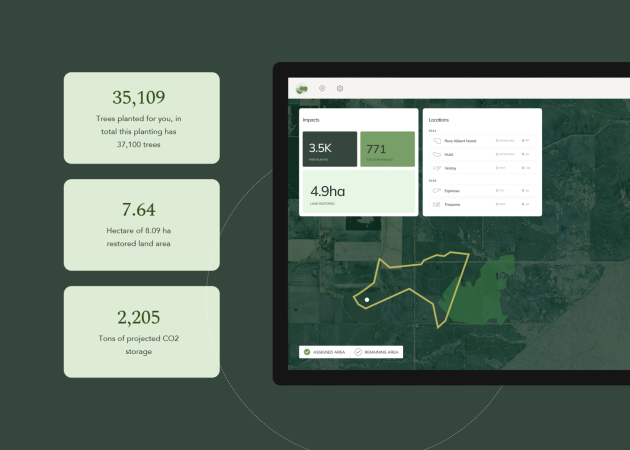
Our featured cases show how Beetroot turns complex ideas into working solutions, from multimodal AI to related AI product work. Explore a few examples below.
Custom AI & Data Workshops
Give your team the confidence to work with multimodal AI in practice. Our custom workshops are shaped around your goals, experience level, and technical context, so the learning connects directly to the challenges your people are solving.
-
Key benefits of our custom workshops:
-
Build a shared foundation
Help technical and nontechnical participants develop a common understanding of multimodal AI, from the data it uses to the ways different modalities can work together. -
Approach AI responsibly
Explore privacy, fairness, security, and human oversight through examples relevant to your product and workflows, giving your team a clearer basis for responsible decisions. -
Turn learning into practice
Hands-on exercises and direct instructor feedback help participants connect new ideas to their day-to-day work and identify practical next steps for the team.
-
Let’s Talk About Your AI Project
Have a project in mind or still exploring possibilities? Tell us where you are, and we’ll follow up to discuss a practical next step.

FAQ
The answers below explain the data, infrastructure, security, model, and deployment choices involved in a multimodal AI project.