AI Model Integration Services
Connect text, audio, images, video, and sensor data across the systems your product already uses. Our AI integration specialists help shape scalable, maintainable workflows around your architecture, security requirements, and business goals.
-

Top 1% of global
Software Service providers -

ISO 27001 certification
by Bureau Veritas
-

GDPR-Compliant processes
for responsible data protection -
AWS trusted infrastructure
for scalable solutions -

Bureau Veritas —
an independent global leader in testing, inspection, and certification.
AI Model Integration for Connected Decisions
Teams often need to integrate AI when useful data is spread across applications, files, and devices. AI model integration can bring those inputs into a shared workflow, reducing manual handoffs and making outputs easier to review, trace, and improve.
-
Disjointed systems block insight
Connecting CRM, content, and device data can give teams a more complete view without constant switching between separate tools.
-
Manual checks drain hours
Automated scoring and routing can handle repeatable steps while directing exceptions or higher-risk decisions to the right people.
-
Inconsistent predictions confuse users
Shared schemas, prompt standards, validation rules, and guardrails can improve consistency and make outputs easier to review across use cases.
-
Latency slows experiences
Workloads can be distributed across edge and cloud environments to improve responsiveness where the architecture, infrastructure, and traffic patterns support it.
-
Risk grows with every change
Versioned configurations, health checks, and rollback paths make releases easier to control and provide a clearer recovery route when something goes wrong.
-
Scope expands across channels
Modular adapters can make it easier to add new inputs, models, or destinations without rebuilding the entire integration layer.
-
Ready to bring disconnected data and models into a clearer workflow?
Our AI Integration Services
Our AI integration services bring specialists into your existing environment to connect models, data, and applications without forcing you onto a proprietary AI integration platform. Depending on the scope, our experts can support integration, validation, deployment, and handover alongside your team. We also provide AI deployment services for cloud, on-premises, hybrid, and edge environments.
-

System & API Integration
Connect models with CRMs, ERPs, data stores, and third-party services through secure APIs. The work may include schema mapping, authentication, rate-limit handling, error management, logging, and observability across environments.
-
Data Pipeline Architecture & Ingestion
Design pipelines for data from applications, files, streams, and sensors. Depending on the use case, the work can include validation, lineage, access rules, and batch or streaming orchestration for training, inference, or downstream applications.
-
Model Training & Fine-Tuning
Train or adapt models using curated datasets, reproducible experiments, and agreed evaluation criteria. Frameworks, hosting, and tuning methods are selected around the data, constraints, and intended use, with artifacts and documentation prepared for continued ownership by your team.
-
Model Validation & Responsible Reviews
Build evaluation datasets, test known failure modes, and include human review where the risk level requires it. Findings and release criteria can support internal product, security, compliance, and audit-preparation processes.
-
Deployment and MLOps Support
Support model packaging, CI/CD, versioning, staged releases, and rollback planning across agreed environments. Where included, AI model management can cover monitoring setup for drift, cost, latency, and quality, with alerts routed to the responsible client or delivery teams.
-
Edge & Hybrid Inference
Edge AI deployment can place lightweight workloads closer to devices while keeping more resource-intensive processing in the cloud or central infrastructure. The architecture is shaped around latency, connectivity, privacy, hardware, and operating-cost requirements.
-
Security and Compliance Support
We help design and document controls for access, key management, encryption, audit logging, and data minimization. The work can support alignment with GDPR, HIPAA, and internal policies, while legal and compliance decisions remain with the client’s responsible teams.
-
Custom Tech Workshops
Run focused sessions around your repositories, architecture, and roadmap. Topics may include integration patterns, data pipelines, evaluation methods, secure operations, deployment practices, and model lifecycle management, with practical examples and reusable working materials.
-
Need the right mix of integration, deployment, and model support?
Cooperation Models for AI System Integration
Choose a model that fits your roadmap, ownership needs, and delivery stage. Our AI system integration support can cover embedded experts, defined projects, or focused workshops, including enterprise AI integration across teams and environments.
-
Dedicated Development Teams
Long-term cooperationAdd a stable team that works inside your day-to-day processes. You set priorities and scope; we handle the hiring, HR, and admin side. As your needs change, we adjust the team with you — scaling up or down as required.
-
Project-Based Solutions
Milestone-driven deliveryHand us a defined outcome, and we deliver it. We plan, build, test, and ship against agreed milestones, with regular updates on project progress. It’s also a lower-commitment way to work with us before deciding on anything longer-term.
-
Team Workshops
Strategic skill developmentUpskill your engineers through focused, hands-on sessions, delivered on-site or online. On request, we can build the training around your team’s specific learning goals, from model integration and evaluation methods to secure AI deployment.
Match your AI integration roadmap with the level of support and ownership your team needs
Technologies and Tools We Use
We select technologies during discovery and fit them into your existing environment. The exact stack for AI model deployment depends on the model type, data flows, infrastructure, latency requirements, and long-term ownership needs.
-
Model Development and Multimodal Processing
- PyTorch
- TensorFlow
- Hugging Face Transformers
- OpenCV
- OpenAI Whisper
-
Inference and Model Serving
- ONNX Runtime
- NVIDIA TensorRT
- FastAPI
- gRPC, Seldon Core
-
Data Stores and Retrieval
- PostgreSQL
- MongoDB
- Google BigQuery
- Pinecone
-
Data Pipelines and Orchestration
- Apache Airflow
- Prefect
- Dagster
- dbt Core
- Apache Kafka
-
MLOps and Model Lifecycle
- MLflow
- Weights & Biases
- DVC
- Kubeflow
-
Cloud and Container Infrastructure
- Docker
- Kubernetes
- AWS
- Google Cloud
- Microsoft Azure
Custom AI Models vs. Pre-Trained AI Model Integration
Custom models can be useful when domain fit, control, or differentiation justify additional development and MLOps effort. Pre-trained models often provide a faster starting point when established capabilities meet the use case. Many AI model integration solutions combine both approaches, choosing feature by feature based on data, risk, cost, latency, and ownership needs.
-
Custom AI Models
- Can be trained or adapted for niche data, edge cases, and domain-specific rules, with greater control over evaluation criteria and behavior.
- Architecture and tuning can be shaped around privacy, latency, cost, and performance requirements.
- Usually require more data, development effort, evaluation, and lifecycle management, but may provide greater long-term control.
-
Pre-Trained Model Integration
- Provides a faster starting point through established APIs or open-source checkpoints.
- Can reduce initial training effort for common tasks, depending on licensing, customization, and integration complexity.
- Offers less control over model behavior and explainability, with vendor, licensing, or deployment constraints to consider.
From Integration Planning to Production
Our workflow moves from business goals and data readiness to integration, release, and ongoing improvement. The stages are adapted to greenfield systems, existing products, and pre-trained model integrations.
-
Discovery & Objectives
Step 1We clarify the intended outcomes, users, success criteria, constraints, and guardrails. The team also reviews infrastructure, data access, and security requirements to define a realistic scope before development begins.
-
Data Audit & Readiness
Step 2We audit sources, flows, and data quality. Our team profiles bias, missing values, duplicates, and drift. Later, we document lineage, consent, and retention. Then, we establish governance for collection and access so training and inference start from reliable, compliant datasets rather than fragile inputs.
-
Integration Architecture and Plan
Step 3At this stage, the team maps systems, APIs, storage, responsibilities, dependencies, and delivery phases. Risks, checkpoints, and change-management needs are documented so stakeholders can align scope, budgets, and decision boundaries.
-
Model Selection and Customization
Step 4Suitable APIs, open-source models, and custom approaches are compared against cost, latency, privacy, explainability, and deployment requirements. The selection criteria are documented to support later review, replacement, or extension.
-
Experimentation, Training, and Evaluation
Step 5We run tracked experiments across datasets, code, configurations, and model candidates. Results are compared against agreed evaluation criteria, while known failure modes and limitations are documented before release decisions are made.
-
Risk, Ethics, and Validation Reviews
Step 6Model behavior is reviewed through holdout datasets, targeted probes, and human evaluation where appropriate. We document findings, escalation paths, and recommended safeguards for review by the client’s product, security, legal, or compliance teams.
-
Deployment and Release Pipelines
Step 7For machine learning model deployment, we support packaging, CI/CD, environment configuration, staged releases, and rollback planning across cloud, on-premises, or hybrid infrastructure. Release controls are adapted to the system’s risk and operational requirements.
-
Monitoring, Governance, and Improvement
Step 8We help establish tracking for drift, cost, latency, and usage, along with lineage and version controls for retraining or retirement. Unifying DevOps and MLOps practices can improve visibility, strengthen governance, and support more reliable releases across teams and environments.
Meet the Specialists for Your AI Delivery Team
Connect with the specialists who can help turn complex AI integration plans into working systems. From architecture and MLOps to data engineering and edge deployment, Beetroot can shape the right mix of expertise around your project and team.







Industries We Support
AI integration can be especially useful where teams work with complex data, time-sensitive decisions, or demanding security and governance requirements. We adapt the architecture and delivery approach to the workflows, constraints, and priorities of each sector.
-
HealthTech
Connect EHRs, medical devices, and care portals so relevant data can reach the systems and teams that need it. We help design integrations, controls, and documentation that support HIPAA and regional privacy requirements, while compliance decisions remain with the client’s responsible teams.
-
GreenTech
Bring together sensor data, satellite imagery, and field reports for use cases such as asset tracking, anomaly detection, and emissions calculations. Clear lineage and reproducible data flows can also support internal reporting and ESG disclosure processes.
-
FinTech
Connect core banking systems, fraud tools, CRM platforms, and analytics workflows. Access controls, audit logging, and documented data flows can support internal PCI DSS and regulatory review without compromising responsiveness in customer-facing processes.
-
EdTech
Bridge LMS, SIS, assessment tools, and content libraries to make progress data and feedback available across products and devices. The setup can account for privacy, accessibility, and peak-period demands while keeping data pipelines maintainable.
-
E-Commerce & Retail
Integrate PIM, ERP, OMS, and storefront systems to coordinate inventory, pricing, recommendations, and customer-support workflows. Shared dashboards can give teams a clearer view of conversion, stock, and fulfillment data without relying on fragmented spreadsheets.
-
Logistics & Mobility
Combine WMS, TMS, telematics, and route-optimization systems to support status updates, ETA calculations, and exception handling. Where connectivity is inconsistent, edge or site-level components can help selected workflows continue with reduced dependence on a constant cloud connection.
Want to explore where connected AI workflows could add value in your sector?
Why Choose Beetroot
AI integration works best when technology, people, and day-to-day operations are considered together. Beetroot brings in practical engineering expertise, open collaboration, and a strong commitment to security, sustainability, and long-term capability.
-
Build with People and Impact in Mind
Accessibility, team well-being, resource use, and the people affected by the system all shape our decisions. The aim is technology that remains useful, responsible, and maintainable over time.
-
Keep Knowledge Within the Team
Our engineers work closely with your existing team and become familiar with its tools, routines, and technical context. Beetroot supports sourcing, HR, and retention, while clear ownership and shared documentation help preserve knowledge as the product evolves.
-
Bring Security into the Design
Security is part of the conversation from the start. Depending on the project, we can support access controls, encryption, key management, audit logging, and documentation for your internal security and compliance processes.
-
Add Relevant Domain Expertise
Some projects benefit from specialists who already understand the surrounding industry. Where relevant, experience from HealthTech, GreenTech, finance, education, and other domains can inform discovery, architecture, and delivery.
-
Choose Technology Around Your Needs
We choose technologies around your product, architecture, and long-term goals. Frameworks, cloud services, and interfaces are considered in relation to performance, cost, governance, and ownership so that the system can evolve as your needs change.
-
Fit AI to Real Operations
AI needs to work within the systems, workflows, and decision points your teams already rely on. We shape the architecture around that operational reality so the solution remains practical after the initial launch.
Client Testimonials
Read what clients say about working with Beetroot across AI, data, product, and software development projects.

Featured Cases
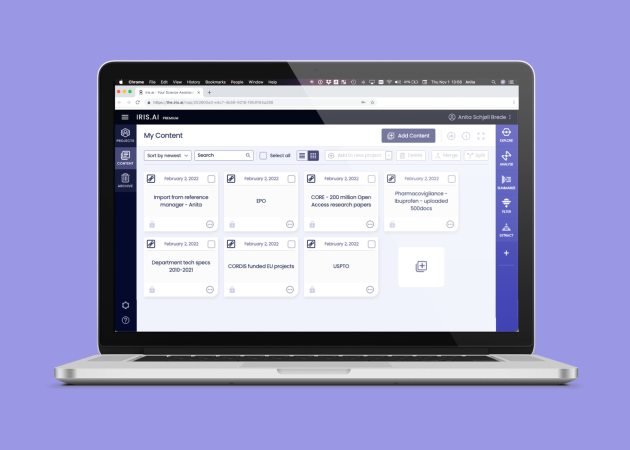
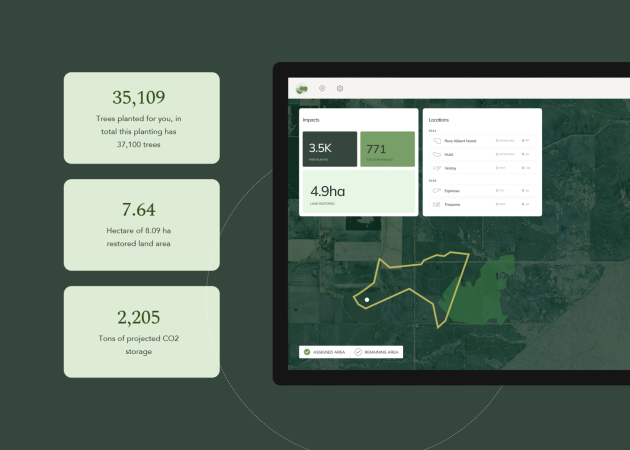
Explore selected projects where Beetroot teams connected data, AI capabilities, and product interfaces in real-world systems. See our complete portfolio for more insights.

Custom AI & Data Workshops for Your Team
Help your team build practical AI and data skills through focused, hands-on training. Each workshop is shaped around your goals, current experience, and technical context, with collaborative exercises and direct feedback from experienced instructors.
-
Training shaped around your team
We assess participants’ existing knowledge and expectations before the workshop, then adapt the content and level of detail to the group.
-
Practical, collaborative learning
Participants work through relevant exercises together, test new approaches, and receive personalized feedback as the session progresses.
-
Resources that stay with you
Your team keeps access to the workshop materials, notes, and shared learning resources for use after the sessions.
Bring Your AI Plans Into Focus
Tell us about your goals, current stack, and constraints, and we’ll follow up to discuss a practical next step.

FAQs
Start with the practical questions teams usually need to resolve before connecting AI models to existing products, data, and infrastructure.