Computer Vision in Security Systems: Custom AI for Detection and Response
- Real-Time Object Detection
- Automated Alerts
- Motion Tracking
From tech assistance during intensity peaks to building end-to-end custom software solutions, we help scaleups grow with confidence and enterprises innovate without added risk.
-

Top 1% of global
Software Service providers -

ISO 27001 certification
by Bureau Veritas
-

GDPR-Compliant processes
for responsible data protection -

AWS trusted infrastructure
for scalable solutions -

Bureau Veritas —
an independent global leader in testing, inspection, and certification.
Where Intelligent Security Systems Need More Than Video Feeds
Security teams often have more footage than they can review, and important events can get buried in routine activity. Computer vision adds context to camera feeds, helping operators spot relevant changes sooner and make better use of the existing systems.
-

Too much video to monitor manually:
Too much video to monitor manually: Continuous feeds are difficult to review at scale. AI video analytics can flag predefined events or objects for operator attention, reducing the amount of routine footage teams need to watch.
-
Alerts that lack context:
Alerts that lack context: Basic motion alerts can create noise without explaining what happened. Behavior and anomaly detection can help distinguish routine activity from patterns that warrant closer review, while keeping human judgment central.
-
Access workflows that need stronger identity checks:
In carefully scoped environments, access control with facial recognition can support identity verification at restricted areas. The setup should reflect privacy requirements, confidence thresholds, and manual override procedures.
-
Fragmented visibility across locations:
Distributed cameras and separate systems make cross-site coordination harder. Searchable event data and shared dashboards can bring incidents from multiple sites into one view, helping operations teams coordinate review and response.
Computer Vision Surveillance Features We Help Implement
Computer vision surveillance software can turn raw video into structured events, alerts, and searchable metadata. From real-time monitoring to automated incident detection, Beetroot helps add these capabilities to your existing infrastructure and security workflows, tailored to your technical and privacy requirements.
-
Object and Motion Tracking
Track people, vehicles, or assets across frames and turn continuous feeds into discrete events. Detection, object association, and motion tracking can surface relevant clips and metadata inside the VMS, helping operators review less routine footage and focus on activity that needs attention.
-
Face Verification and Access Control
In carefully scoped environments, access control with facial recognition can support identity verification at restricted entry points. The setup can be designed around confidence thresholds and manual review, with logging and privacy controls aligned with your policies and internal legal or compliance reviews.
-
Behavior and Anomaly Detection
Models can learn patterns that are typical for a site and flag changes such as loitering, unexpected movement, or objects left behind. These alerts give operators earlier context while keeping human review central to consequential decisions.
-
Crowd and Occupancy Monitoring
Video analytics can estimate crowd density, movement, and dwell time across venues, transport hubs, retail spaces, or communal areas. These signals inform staffing and capacity planning while giving teams a clearer view of busy periods and special events.
-
Real-Time Alerts and Event Detection
Trigger notifications for defined events such as line crossing, perimeter breaches, or unattended objects. Our engineers tailor the rules and thresholds to each site, and route alerts to the tools operators already use, helping them review relevant events with fuller context.
-
Searchable Event Data
Link detections to the relevant clips and timestamps so footage can be searched by event instead of reviewed from start to finish. This gives operators a more practical way to revisit incidents and navigate the supporting record.
Looking to add AI-powered features to your existing surveillance setup?
Our Computer Vision Engineering Services for Security
Turning a surveillance feature into a working system involves more than model development. Beetroot can support software work from initial scoping and data preparation through integration, deployment, and subsequent improvements, tailored to your existing cameras, VMS, and internal requirements.
-

Custom Computer Vision Solution Development
A custom system is built around the way your operators review events and act on them, rather than forcing a fixed product into the workflow. We design the vision pipeline and application logic, connecting the outputs to the interfaces your team already uses.
-
Model Training and Optimization
Models need to work with the lighting, viewpoints, and movement found at your sites, not only in a controlled dataset. We train or adapt them for those conditions and tune the balance between detection quality and processing speed.
-
Data Preparation and Annotation
Build models on footage and labels that reflect the intended operating environment. We help organize datasets, define annotation requirements, check data quality, and include relevant edge cases while accounting for privacy-sensitive material.
-
Image Segmentation and Scene Analysis
Add finer visual context where basic object detection is not enough. Our specialists develop segmentation and scene-analysis components for zones, boundaries, occupancy, and relationships between objects.
-
VMS and Security System Integration
Bring detections, alerts, and metadata into the systems your teams already use. Our engineers connect computer vision modules with VMS platforms, access systems, dashboards, and incident-management tools through available APIs and protocols.
-
MLOps and Model Maintenance
After launch, teams need a clear view of model performance and a controlled way to manage changes. When ongoing support is part of the scope, we put monitoring and update workflows in place and help plan retraining as operating conditions change.
-
Custom Tech Workshops
Give internal teams the knowledge they need to evaluate, use, or maintain the solution. We tailor expert-led sessions around their current tools, knowledge gaps, and project goals, covering computer vision, secure AI, deployment choices, and governance considerations.
-
Edge, On-Premises, and Cloud Deployment
Run the system in an environment that fits your latency, privacy, connectivity, and scaling requirements. We package and deploy models for edge, on-premises, cloud, or hybrid setups, coordinating with hardware and security specialists where needed.
-
Turn separate computer vision components into a solution that fits your security stack:
Cooperation Models
Your team may already have the hardware and security workflows in place but need support with a specific part of the computer vision work. We offer flexible collaboration models to meet your current needs, with room to adapt the setup as your requirements and goals evolve.
-
Dedicated Development Teams
Add the engineering capacity needed to develop and improve your security product over time. The specialists work as an extension of your in-house team, while Beetroot handles recruitment, onboarding, and administrative support.
-
Project-Based Delivery
Choose this setup for a clearly scoped initiative — an MVP, pilot, feature development, or custom integration. It also gives you a practical way to test the collaboration before committing to a long-term engagement.
-
Tailored Team Training
Strengthen your team’s understanding of computer vision, secure AI, or emerging technologies. We identify gaps and design practical sessions that address real challenges, helping participants build essential skills for their work.
Not sure which engagement model fits your current needs?
Technologies and Tools We Use
We select proven frameworks and tools based on the problem being solved and the environment where the system will run. Depending on the project, the stack may include:
-
Frameworks
- TensorFlow
- PyTorch
- OpenCV
-
Model Optimization
- ONNX
- TensorRT
-
Deployment and Integration
- Docker
- AWS
- Kubernetes
-
Data Annotation and Management
- Labelbox
- CVAT
- MLflow
Meet Your Computer Vision Team
Security vision projects rarely stop at model development. Beetroot can shape the team around the work, combining computer vision and ML expertise with the engineering support needed to integrate and deploy the solution in your existing environment.




How We Develop Computer Vision Solutions for Security
Security vision projects need a clear use case, representative footage, and a deployment plan that fits the existing environment. The stages below show a typical path from initial scoping to rollout, adapted to the data, integrations, and operating conditions involved.
-
Problem Definition
Step 1We clarify what the system needs to detect, where the results should appear, and how operators will use them. Success criteria are tied to the workflow — acceptable false-alert levels, processing speed, or the amount of footage that requires review. Privacy and data-location constraints are identified at this stage too.
-
Data Gathering
Step 2The available footage is reviewed to see whether it reflects the conditions the model will face. Depending on the project, the client may provide existing recordings or collect additional examples across different cameras, lighting, and site conditions.
-
Data Preparation
Step 3Footage is cleaned, organized, and labeled for the intended task. Sensitive regions can be masked where appropriate, while edge cases and known data gaps are documented so they can be considered during training and evaluation.
-
Model Selection
Step 4The choice of model depends on the task and where it will run. We compare suitable approaches for detection, tracking, segmentation, or verification, taking into account the available compute and the response time the workflow requires.
-
Training
Step 5We train or adapt models using versioned datasets and reproducible configurations. This can involve tuning, class balancing, and repeated testing as the team learns which conditions are hardest for the system to handle.
-
Evaluation
Step 6We check performance against the agreed criteria using footage that reflects the intended environment. Metrics like precision, recall, and false-alert frequency are reviewed alongside event samples, so the technical results can be judged in the context of what operators actually need.
-
Deployment and Integration
Step 7Once the model is ready for a pilot, we connect its outputs to the VMS, dashboards, or alerting tools your team already uses. Rollout can start with a limited set of cameras or locations before expanding, with rollback options in place where operational continuity requires them.
-
Monitoring and Improvement
Step 8After launch, model performance and operator feedback often reveal where thresholds or training data need adjustment. When ongoing support is included, Beetroot can help manage updates and plan retraining as the environment changes.
Why Choose Beetroot for Computer Vision Projects in Security
Beetroot brings computer vision expertise into a wider software delivery ecosystem. As the project develops, you can bring in adjacent engineering specialists or complement delivery with tailored training for your internal team.
-
Cross-Functional Teams
Computer vision projects often require more than ML expertise alone. We can add the backend, data, integration, or QA specialists needed to support the wider system.
-
Integration With Existing Operations
The software should fit the tools and workflows your security teams already use. We design around your current VMS, access systems, and available interfaces so the computer vision layer becomes part of the wider operating environment.
-
Security- and Privacy-Aware Development
Video and biometric data require careful technical handling. We build the relevant controls into the software and document them in a way that supports your internal security, legal, and compliance review.
-
Software Delivery and Training in One Ecosystem
Some teams need engineering support first and internal upskilling later; others need both alongside each other. Beetroot combines software delivery with tailored technical training, making it easier to build internal capability alongside the solution.
-
Technology-Agnostic Approach
Your architecture should reflect the use case and the systems already in place, not a preferred vendor. We evaluate suitable frameworks and deployment options against the conditions the solution has to meet.
-
3D Commitment to AI
Our 3D approach considers an AI system’s effect on people, its value to the business, and its wider impact. It encourages us to look beyond technical performance when making decisions about how the system is designed and used.
Client Testimonials
The testimonials below reflect a range of Beetroot’s work across AI, software, and data — and share, in our partners’ own words, what you can expect from working with us.

Featured Projects
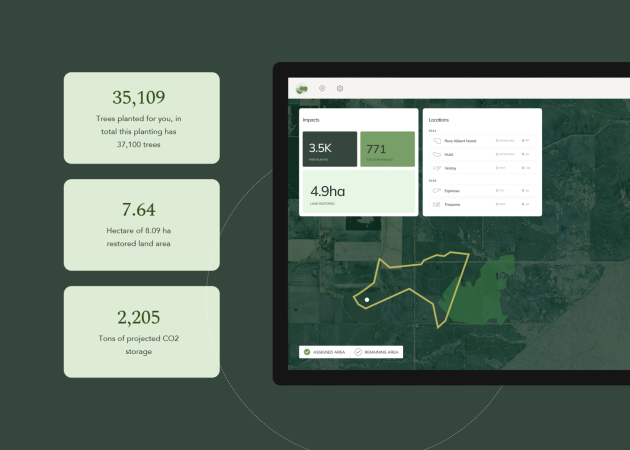
The cases below show how Beetroot contributes to AI, data, and software products in very different settings, from scientific research to industrial manufacturing.


Custom Tech Workshops for Computer Vision Teams
Beetroot can tailor a workshop to the questions your team is working through, either before implementation or alongside it. The sessions build practical understanding of the computer vision system and the decisions involved in using it responsibly. Benefits include:
-
Relevance for Your Project
The content starts from the questions your team is already working through rather than following a fixed curriculum. Examples and exercises can be adapted to the use case without assuming niche surveillance expertise.
-
Practical Technical Learning
Participants can explore topics such as data preparation, model evaluation, deployment trade-offs, or responsible handling of visual data. The goal is to connect technical concepts with the decisions they may face during implementation.
-
Shared Understanding Across Teams
Workshops give engineering, product, and other stakeholders a clearer basis for discussing the system. This can make later planning and handover easier, especially when responsibilities span several internal teams.
Start Your Computer Vision Security Project
Tell us a bit about where your current security monitoring falls short and what you’re hoping computer vision can add. We’ll review the details and suggest a practical next step.

FAQs
Answers to common questions about how computer vision fits into security systems and what implementation may involve.